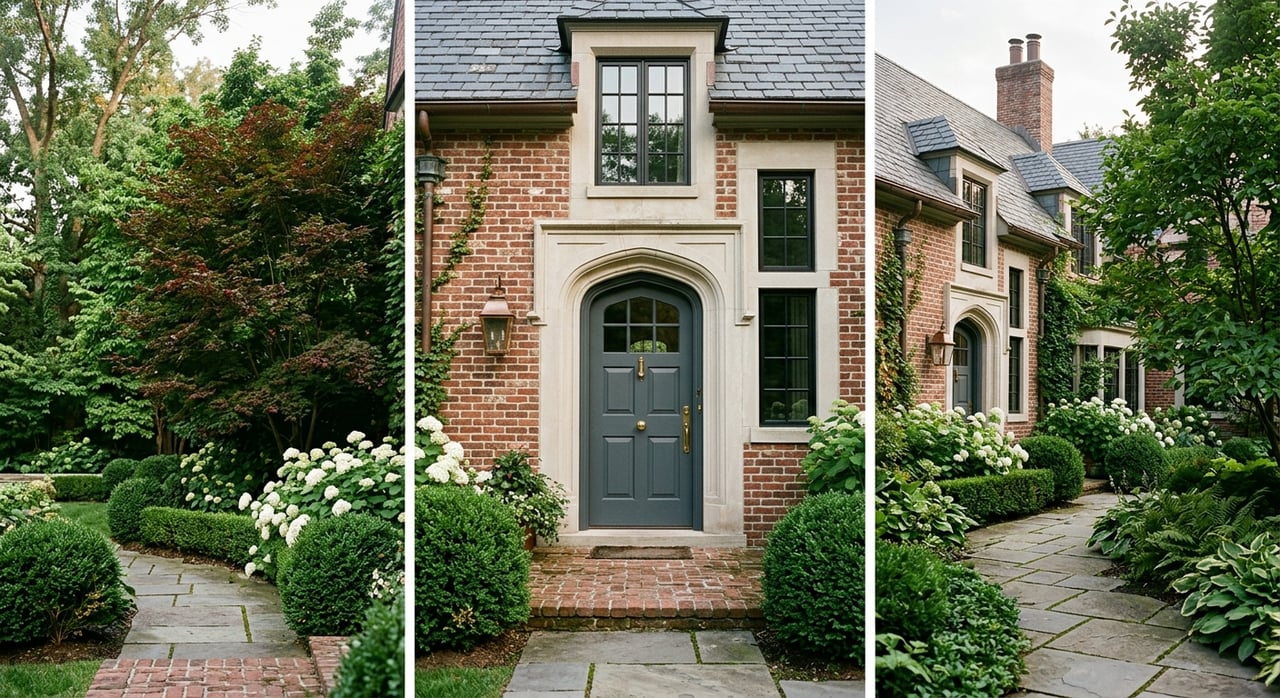
If you are drawn to Ladue, you are probably not just shopping for square footage. You are looking for a setting, a sense of arrival, and a home style that fits how you want to live. In Ladue, the lot, the street pattern, and the architecture all shape that experience, and learning to read those clues can help you buy with more confidence. Let’s dive in.
Why Ladue Feels So Distinct
Ladue is a mature residential community with neighborhoods that vary in age and character, yet city guidance points to a consistent level of quality and architectural detail. Official materials describe fine estates, large homes, elegant cottages, rolling hills, mature vegetation, and architecturally diverse homes. That mix is a big part of Ladue’s appeal.
What makes Ladue especially interesting for buyers is that style and setting often work together. A formal brick exterior may sit on a large wooded lot, while a cleaner-lined newer home may appear on a more compact, street-facing block. In other words, the house itself matters, but so does the zoning pattern around it.
Start With the Lot First
Before you focus on trim, windows, or rooflines, look at how the house sits on the land. In Ladue, zoning districts strongly influence whether a street feels estate-like, suburban, or more village-like. That broader pattern can affect privacy, curb presence, and what future changes may be possible.
The city’s residential zoning includes Districts A, B, C, D, E, and E1, and each one has different lot sizes, setbacks, width requirements, and height limits. That is one reason one block may feel spacious and secluded, while another feels more compact and connected to nearby streets and services.
District A and B Feel More Estate-Like
District A is the largest-lot category, with a 3-acre minimum lot size, a 75-foot front setback, 50-foot side and rear setbacks, and a 45-foot height limit. The ordinance says this district is meant to preserve a spacious, wooded, rural character, especially where topography, waterways, floodplain conditions, or roadway capacity limit density. City guidance also notes that homes here are often set farther from the street and may be reached by narrow private lanes.
District B also offers a spacious feel, though slightly less rural in character. It requires 1.8-acre minimum lots, 50-foot setbacks on all sides, and the same 45-foot height limit. The ordinance describes B as preserving natural vegetation and openness in areas with easier access from major roads, so these blocks often read as more suburban than secluded.
District C Offers Space With More Neighborhood Structure
District C requires a 30,000-square-foot minimum lot, a 50-foot front setback, and a 45-foot height limit. The ordinance frames it as more traditional subdivision development while still preserving meaningful green space. City guidance notes that lots in this district can still have room for features like a pool or detached garage.
For many buyers, District C can feel like a middle ground. You may still have breathing room and a substantial yard, but the street pattern often feels more familiar and organized than the largest-lot estate settings.
District D, E, and E1 Feel More Compact
District D requires a 15,000-square-foot minimum lot, while Districts E and E1 require 10,000 square feet. Front setbacks are typically 40 feet in D and E, while E1 allows a 25-foot front setback and limits height to 28 feet. The ordinance describes E1 as pedestrian-friendly and intended for smaller-scale homes near the Clayton Road commercial district.
If a house sits closer to the street with a smaller front yard, it often suggests District D, E, or E1. These areas can feel more compact and more consistently built out, with homes that share similar quality and general layout. For some buyers, that can mean less land to manage and a more connected, neighborhood-oriented feel.
The Four Styles You’ll See Most Often
Once you understand the lot, the next step is the architecture itself. In Ladue, four style families show up often enough that they are useful shorthand when you are reviewing listings, photos, and private tours.
Brick Colonial and Colonial Revival
Colonial Revival is one of the most enduring residential styles in the United States, and in Ladue it often appears in stately brick homes with a formal front elevation. The National Park Service describes this style as drawing from Federal and Georgian precedents without copying them exactly. Common clues include symmetry, pronounced entries, columns or pilasters, fanlights or sidelights, pedimented or gabled window treatments, and double-hung windows.
For you as a buyer, that exterior usually hints at a more traditional interior rhythm. You may see a clearer room hierarchy and a more formal layout rather than a fully open plan. If you want timeless curb appeal and a classic sense of order, this style often delivers it beautifully.
French-Inspired Manor Homes
French Eclectic or French-inspired manor homes tend to bring instant drama to a streetscape. According to National Park Service materials, the style often includes a tall, steeply pitched hip roof, flared eaves, large chimneys, and exterior materials like brick, stone, or stucco. Some homes may also include half-timbering, towers, or arched entrances.
In Ladue, this style often feels especially at home on large lots. The massing and roofline create a sculptural, estate-like presence that can feel both grand and deeply rooted. If you are looking for romantic character and a strong visual identity, French-inspired homes often stand out quickly.
Mid-Century Modern Homes
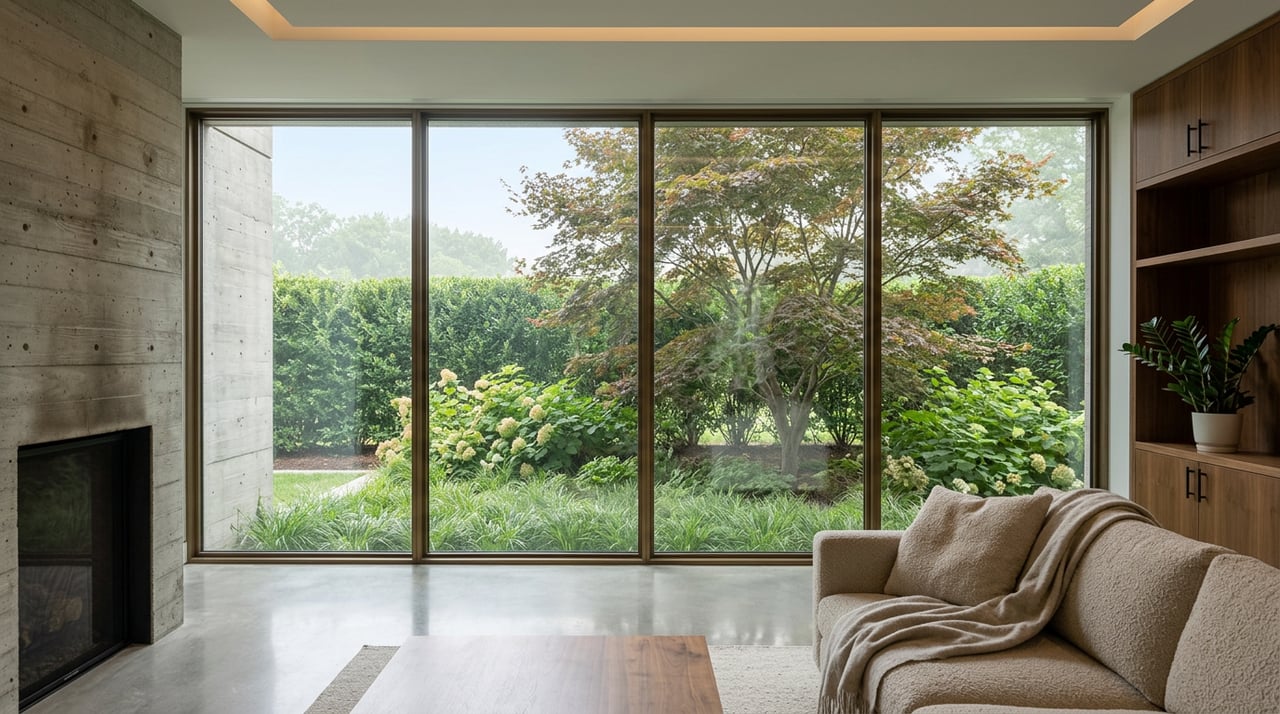
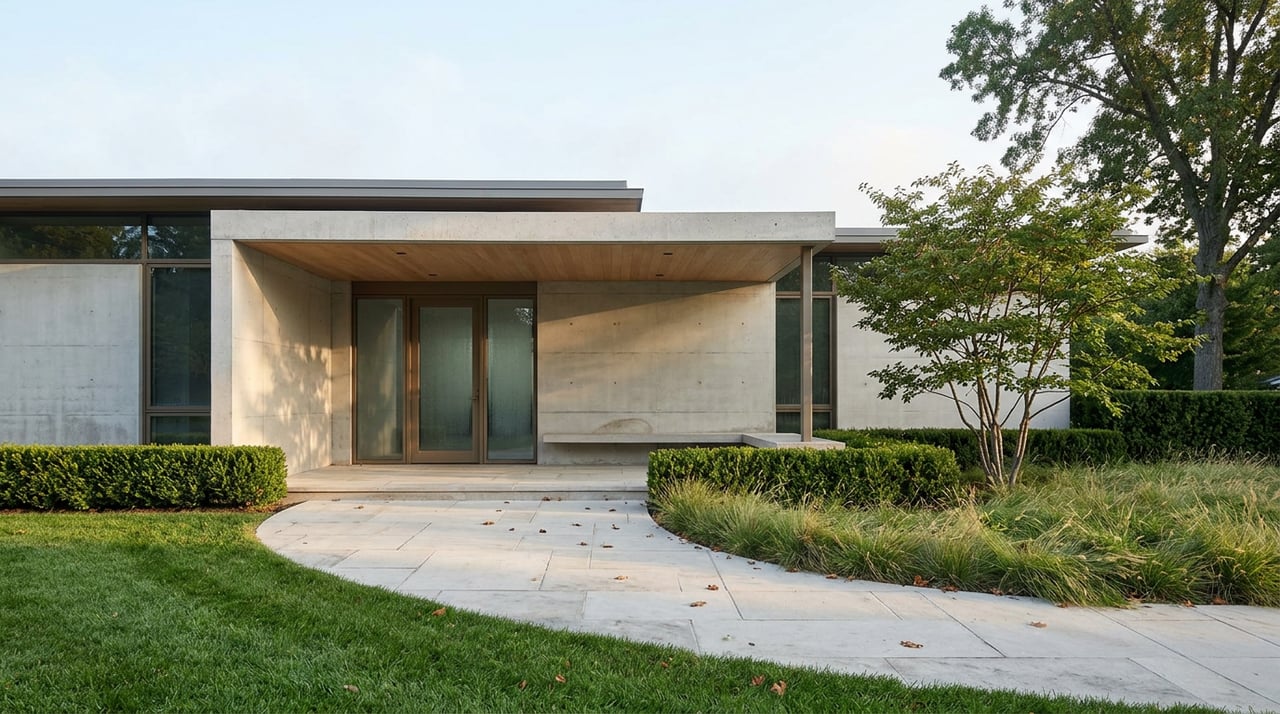
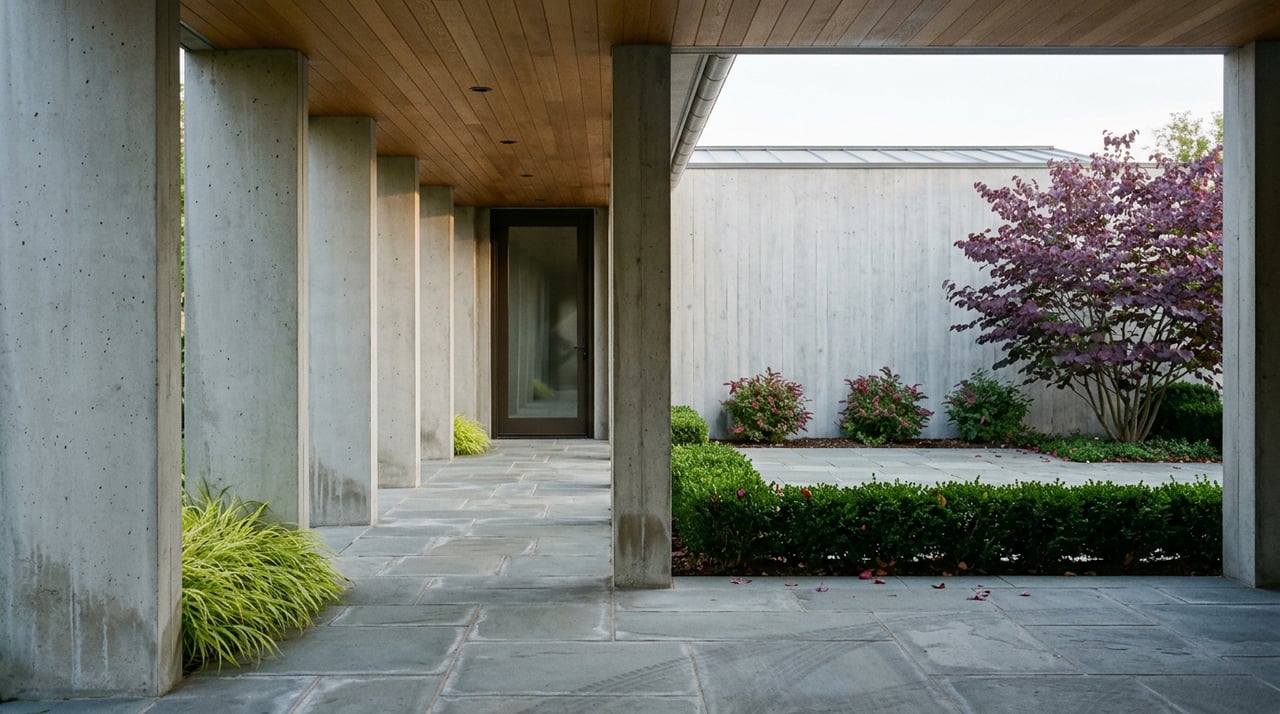
Mid-century modern homes offer a very different experience. National Park Service material on the modern movement describes these homes as long and low, with generous glass and steel, sweeping windows, natural colors and textures, and a strong effort to blend with the landscape.
Ladue has a meaningful local example in the Modern Movement house at 24 Dielman Road, a National Register-listed home designed by Bernoudy-Mutrux and built in 1951. That local reference matters because it shows that postwar modern design is part of Ladue’s architectural story, not an outlier. If you value light, horizontal lines, and a closer visual relationship with the outdoors, this category may be worth a close look.
Transitional Builds
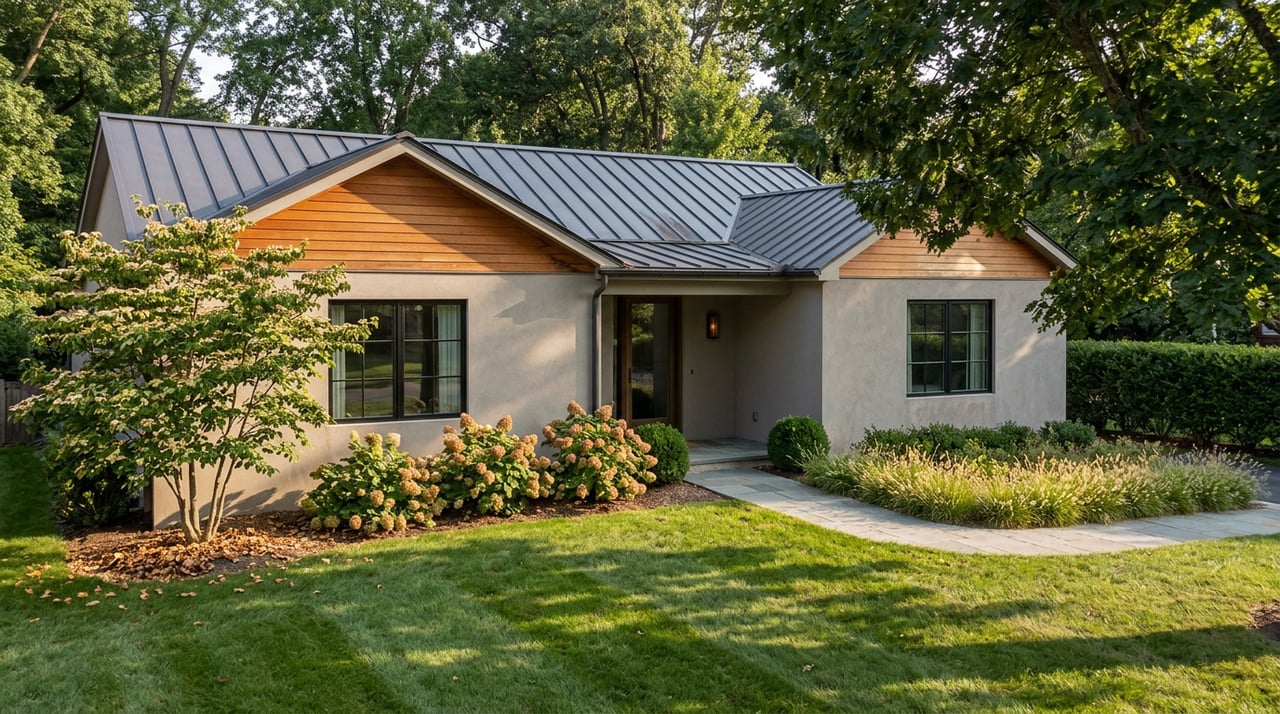
Transitional architecture is less rigid than the historic styles above. It generally combines traditional and modern cues, often with cleaner lines and layouts designed for contemporary living. It is not a strict historic category, and the definition can be flexible.
In a Ladue listing, “transitional” often signals a house that bridges old and new. You might see simplified detailing, a more open plan, and a blend of familiar materials with fresher proportions. This can be especially appealing if you want warmth and character without a heavily formal feel.
How to Read Listing Photos Like a Local
In Ladue, listing photos often tell you more than the remarks section. If you know what to watch for, you can start narrowing fit before you ever schedule a showing.
Look for Site Clues
A house set far back behind a long drive or private lane usually points to District A or B and a more estate-like setting. If the lot appears to have room for a pool, detached garage, or other substantial accessory structure, it is more likely to be District C or larger. If the front yard is smaller and the house sits closer to the street, you may be looking at District D, E, or E1.
Look for Rooflines and Materials
A steep roof, stone or stucco exterior, and prominent chimneys often suggest French Eclectic influence. Symmetry, columns, fanlights, and a centered entry often point toward Colonial Revival. Low horizontal massing and broad expanses of glass suggest mid-century modern, while blended traditional-modern cues often indicate a transitional home.
Match Style to Lifestyle
Style is not just visual. It often hints at how a home may live day to day. A more formal exterior can align with a more traditional floor plan, while cleaner-lined transitional or modern homes may offer a more flexible flow.
That is why the best search is not just about age or price. It is about matching architecture, lot scale, and layout character to your actual routine and preferences.
Why Renovation History Matters in Ladue
In Ladue, exterior changes are not simply cosmetic. The city’s Architectural Review Board reviews most permit-driven exterior projects, including new homes, additions, outdoor living areas, window and door changes, porches, pergolas, deck expansions, sheds, and dormers. The goal is compatibility with surrounding structures and the broader character of the area.
That means if a property is marketed as updated, expanded, or ready for your next phase, approval history matters. Some maintenance and repair work that does not change outward appearance may be exempt from an ARB application, though a building permit may still be required. For buyers, this is an important layer of due diligence.
A Simple Buyer Checklist for Ladue
When you tour homes or review listings, keep this short framework in mind:
- Start with the setting: How far is the home from the street, and how does the block feel?
- Check the lot scale: Does the site look estate-like, spacious but suburban, or more compact?
- Read the style clues: Symmetry, steep roofs, glass walls, or blended detailing can tell you a lot.
- Think about layout fit: Does the style suggest a formal plan or a more open, flexible one?
- Ask about approvals: If the home has been renovated or expanded, find out what was approved.
- Consider future plans: Lot size, setbacks, and district rules can shape what may be possible later.
One practical note is that single-family dwellings are generally limited to 15,000 square feet under roof in Districts A through E, and 9,000 square feet in E1 unless a special use permit is granted. That may not affect every purchase, but it can matter if you are comparing larger homes or thinking about future expansion.
The Best Way to Shop Ladue by Style
The smartest way to buy in Ladue is to think in layers. First, identify the block feel you want. Then narrow the architectural styles that speak to you. Finally, test whether the layout and site support your everyday life, your entertaining style, and any future plans you may have.
In a market like Ladue, the most compelling homes are often the ones where architecture and setting feel in harmony. When you understand how lot, zoning, and design work together, you can shop with a sharper eye and a stronger sense of what truly fits.
If you want a more curated way to evaluate Ladue homes by architecture, setting, and lifestyle fit, Nika Leoni offers a thoughtful, high-touch approach designed to help you move with clarity.
FAQs
What architectural styles are most common in Ladue homes?
- Buyers in Ladue will often come across Brick Colonial or Colonial Revival homes, French-inspired manor or French Eclectic homes, mid-century modern homes, and newer transitional builds.
What do Ladue zoning districts tell buyers about a property?
- Ladue zoning districts help explain lot size, setbacks, height limits, and overall block feel, which can make one area feel more estate-like and another feel more compact or village-like.
What does a long private drive usually mean in Ladue?
- In Ladue, a home set far back behind a long drive or private lane often suggests District A or B, which are associated with larger lots and a more estate-like setting.
What should buyers know about renovations in Ladue?
- Buyers should know that Ladue’s Architectural Review Board reviews most permit-driven exterior projects, so approval history can be important when a home has been expanded, renovated, or marketed for future changes.
What is the difference between Colonial Revival and French Eclectic in Ladue?
- Colonial Revival homes typically show more symmetry and formal entry details, while French Eclectic homes often feature steep roofs, prominent chimneys, and a more sculptural manor-like appearance.
What does E1 zoning mean for a Ladue home?
- E1 zoning in Ladue is intended for smaller-scale, pedestrian-friendly single-family homes near the Clayton Road commercial district, with a 25-foot front setback, a 28-foot height limit, and a general size limit of 9,000 square feet under roof unless a special use permit is granted.