Here it is, ready to copy and paste:
Copenhagen Luxury Real Estate in 2026: A Resilient Market Built on Design, Efficiency, and Livability
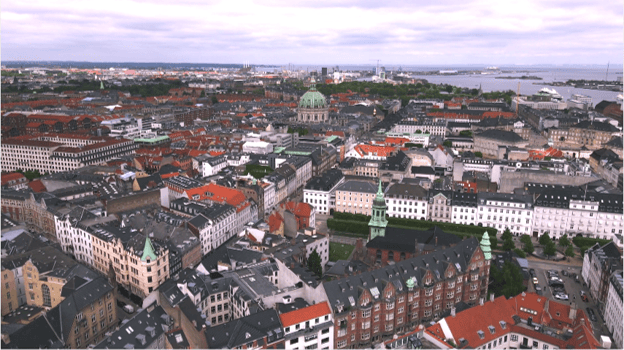
Copenhagen remains one of Europe's most livable cities, with strong demand for well-designed, energy-efficient homes.
Copenhagen has always done things differently. Where other European capitals chase volume, Copenhagen chases quality. Where other markets measure success in price-per-square-foot, Copenhagen measures it in design, efficiency, and livability. And in 2026, that approach continues to pay off in ways that matter to serious buyers.
A MARKET THAT PROVED COMPARATIVELY RESILIENT
Elevated interest rates created pressure across European housing markets, and Denmark was not immune. The 2022 to 2023 period brought a meaningful correction. What followed, however, was a recovery that speaks to the underlying strength of Copenhagen as a place people genuinely want to be.
According to Nykredit, national house prices in Denmark were 7% higher year-over-year in Q4 2025, with Copenhagen flat prices up 24% over the same period. Sales leveled off but remained at strong levels. The broader Copenhagen housing market remains active, and the premium segment appears to be benefiting from limited supply and strong demand.
That resilience reflects the nature of the Copenhagen buyer: patient, research-driven, and clear on what they want. These are not speculative purchasers chasing appreciation. They are buyers making long-term decisions about where and how they want to live.
WHAT COPENHAGEN BUYERS ARE ACTUALLY LOOKING FOR
The profile of the Copenhagen luxury buyer in 2026 is worth understanding, because it is reshaping what gets built and what gets sold.
Modern apartments in well-planned urban settings are generating the strongest demand. Buyers want thoughtful layouts, efficient use of space, and access to the kind of walkable, well-serviced neighborhoods that Copenhagen has spent decades developing. Size is secondary. Design and livability are primary.
Energy performance has moved from a checkbox to a genuine purchase driver. Energy certificates are required for all property sales and new construction in Denmark, providing buyers with a clear picture of a building's energy consumption. Properties with high energy efficiency ratings are attracting serious attention and commanding stronger positions in the market.
Sustainable development is not a marketing term in Copenhagen. New construction is held to high standards, including stricter CO2 limits introduced in recent years, and buyers have responded by concentrating their interest in properties that meet those standards.
QUALITY OVER QUANTITY: THE NORDIC PRINCIPLE
Across Nordic markets broadly, a consistent pattern has emerged: buyers are choosing less, but choosing better. The post-pandemic impulse to acquire as much as possible, as quickly as possible, has given way to something more considered.
The Nordic approach, prioritizing long-term sustainability, quality of construction, and efficient design over speculative square footage, may offer a useful signal for other European markets navigating similar pressures. Copenhagen is the clearest expression of that model right now.
The Economist Intelligence Unit ranked Copenhagen first among all global cities in its 2025 Global Liveability Index, earning perfect scores for stability, education, and infrastructure. That kind of ranking does not simply attract lifestyle buyers. It attracts buyers who understand long-term value.
WHAT THIS MEANS FOR INTERNATIONAL BUYERS
For buyers exploring European property, Copenhagen presents a different kind of opportunity than traditional luxury destinations. It is not about grand historic estates or coastal lifestyle purchases. It is about acquiring a well-built, well-located property in one of Europe's most livable and stable cities, with a buyer pool that values exactly those qualities.
Inventory at the top of the Copenhagen market is limited, especially in prime urban locations. Buyers who arrive with clear criteria and genuine commitment to the market are the ones who find what they are looking for.
The most interesting thing about Copenhagen's 2026 market is not any single data point. It is the consistency of the buyer mindset driving it. Quality. Efficiency. Long-term thinking. Those are not trend-driven values. They are enduring ones. Markets built on enduring values tend to hold up. Copenhagen's track record suggests that will continue to be true.