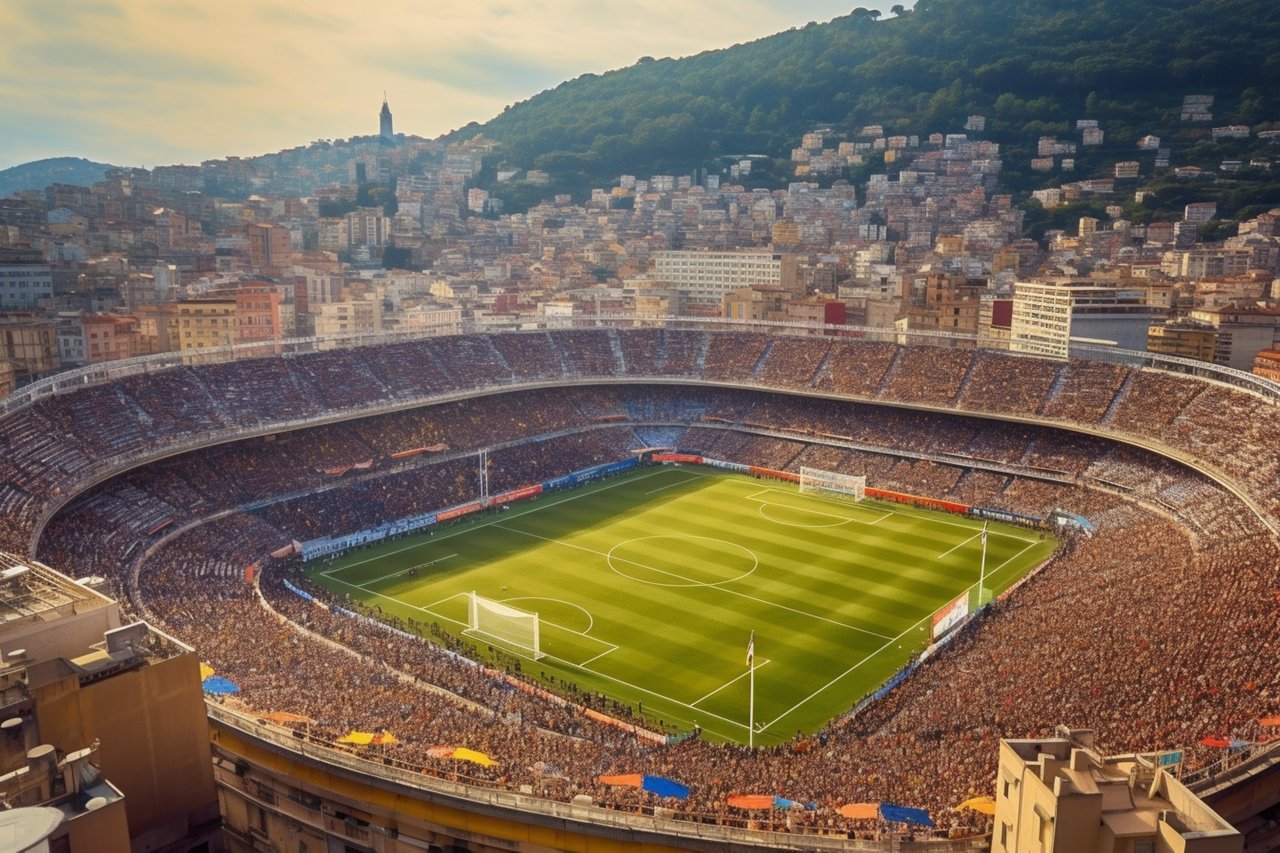
In summer 2026, the world’s attention will turn once again to North America as the 2026 FIFA World Cup returns to the continent for the first time in more than three decades.
Co-hosted by the United States, Canada, and Mexico, the tournament will unfold across 16 cities, spanning Toronto and Vancouver, Mexico City and Monterrey, and major U.S. hubs including Los Angeles, New York, Dallas, Miami, and Philadelphia. Shortly after, Los Angeles will again step into the global spotlight as host of the 2028 Summer Olympics, reinforcing the region’s position at the center of the international sports calendar.
These events are spectacles of sport, but they are also powerful catalysts that reshape cities, accelerate infrastructure investment, and influence luxury real estate markets in ways that can last for decades. The scale alone is extraordinary. The 2024 Summer Olympics in Paris sold a record 9.5 million tickets to visitors from more than 220 countries, while the 2022 FIFA World Cup in Qatar welcomed more than 3.4 million attendees. History suggests that when the world arrives, property markets pay attention.
Economists refer to this phenomenon as the “Olympic effect,” a term popularized by Andrew K. Rose and Mark M. Spiegel to describe the economic lift and property market shifts that often accompany global sporting events. Yet the relationship is anything but simple. These moments can spark short-term demand surges and long-term urban renewal, but they can also expose cities to oversupply and post-event corrections if growth outpaces real, sustainable demand.
The surge before the spotlight
In the years leading up to opening ceremonies, host cities typically experience a burst of economic activity. Governments invest billions in transportation networks, stadiums, airports, hotels, and public spaces. Developers respond quickly, delivering rental housing and high-end residences designed to meet an anticipated influx of global visitors and a temporarily expanded workforce.
This pattern was evident in London ahead of the 2012 Games and in Paris before 2024. In Paris, neighborhoods surrounding the Athletes’ Village, including Saint-Denis, L’Île-Saint-Denis, and Saint-Ouen, saw price growth exceeding 20 percent year over year in the run-up to the Games. International interest surged, particularly for properties with iconic views of the Eiffel Tower or the Seine, reinforcing Paris’s enduring appeal as both a cultural capital and a global luxury market.
Similar dynamics played out in Doha ahead of the 2022 World Cup, where massive infrastructure spending reshaped the city’s skyline, and in Rio de Janeiro prior to the 2014 World Cup and 2016 Olympics, when residential values climbed rapidly as global attention intensified.
But this pre-Games high often comes with risk. Short-term rental yields can soar during event weeks, tempting speculative investors. Once the crowds depart, however, pricing tends to normalize. In Rio de Janeiro, overbuilding and inflated expectations contributed to a prolonged market slowdown after the Games, with luxury developments struggling to retain occupancy. Qatar has faced its own post-event challenges, including a surplus of housing units, underscoring the consequences of supply outpacing long-term demand.
Lessons from legacy cities
The long-term winners are cities that plan beyond the closing ceremony. Barcelona, host of the 1992 Games, experienced a dramatic property bubble in the immediate lead-up, followed by a sharp correction. Yet the infrastructure improvements and waterfront redevelopment ultimately helped position the city for sustained growth over the following decade.
London offers another instructive example. While parts of the market softened briefly after 2012, East London’s Newham borough, home to the Olympic Park and Athletes’ Village, has since recorded some of the strongest long-term price appreciation in the United Kingdom. Thoughtful regeneration transformed a once overlooked area into a vibrant residential and commercial hub.
Paris provides a more recent model of restraint and balance. Rather than overheating the rental market, the city focused on restoration, livability, and long-term housing continuity. Owners who capitalized on premium short-term rentals during the Games viewed the income as a bonus, not the foundation of their investment strategy. The result was no post-Games downturn and a city that emerged refreshed, globally admired, and fundamentally unchanged in its long-term desirability.
North America steps onto the field
For North America, soccer’s global reach presents a unique opportunity. The 2026 World Cup is projected to generate billions in regional economic activity, with host metropolitan areas such as New York, Los Angeles, and Dallas–Fort Worth already seeing heightened international attention.
In deeply populated and supply-constrained markets like New York and New Jersey, real estate professionals do not anticipate a post-tournament correction. Instead, the event is expected to amplify short-term rental activity while reinforcing the region’s status as a global gateway city.
Dallas–Fort Worth, meanwhile, stands to benefit from showcasing its luxury housing stock, business-friendly climate, and lifestyle appeal to a worldwide audience. In markets like this, global sporting events function less as a pricing catalyst and more as a branding moment, introducing international buyers to cities they may not have previously considered.
Looking ahead: Milan, Brisbane, and beyond
Future host cities are already positioning themselves. The 2026 Winter Olympics will spotlight Milan and Cortina d’Ampezzo, boosting tourism and reinforcing Italy’s luxury appeal without fundamentally altering already strong property markets. Further ahead, Brisbane, host of the 2032 Summer Games, is experiencing rising property values driven by lifestyle migration, urban development, and growing international visibility.
In each case, the Games act as an accelerant rather than a sole driver of growth, amplifying trends already underway.
The luxury takeaway
For luxury buyers and sellers, the lesson is consistent across continents. Timing, location, and long-term vision matter. Properties that benefit most are those integrated into enduring urban improvements such as strong transit links, revitalized neighborhoods, and authentic lifestyle appeal. Short-term gains tied solely to event demand are fleeting, while lasting value comes from cities that use the world stage to invest wisely in their future.
When the final whistle blows and the medals are awarded, the true winners are not just the athletes, but the cities that transform global attention into long-term livability and resilience.
________
Source: Luxury Outlook (sothebysrealty.com)