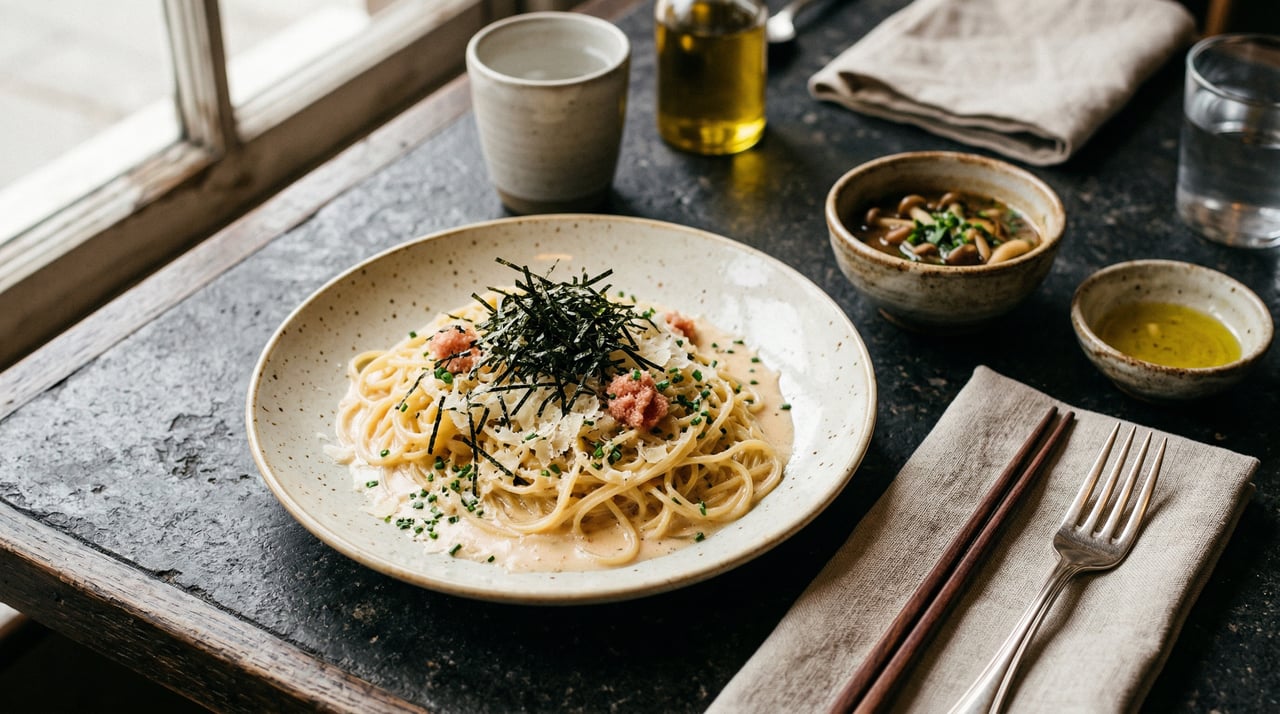
What Is Wafu Italian?
The term “wafu” means Japanese-style, while “itameshi” combines the Japanese words for Italy and meal. Together they describe a culinary approach where Italian dishes such as pasta, risotto, and pizza are reinterpreted through a Japanese lens.
The concept is straightforward but remarkably elegant. Italian cooking provides the structure, while Japanese ingredients and flavor profiles reshape the experience.
A plate of pasta might include:
-
Spicy mentaiko cod roe and butter
-
Soy sauce or miso incorporated into cream sauces
-
Seaweed, mushrooms, or pickled vegetables layered into classic Italian preparations
The result is cuisine that respects both traditions while introducing something entirely new.
Not As New As It Sounds
Although the trend feels modern, Japanese-Italian fusion has deeper roots.
Italian food began gaining popularity in Japan in the early twentieth century. After World War II, Western ingredients became more widely available, and Japanese chefs started adapting Italian dishes to local tastes.
One early example is Napolitan spaghetti, a Tokyo creation made with ketchup, sausage, and vegetables. While unconventional by Italian standards, it reflects the creativity that helped shape the broader itameshi movement.
Over time, chefs continued experimenting. Pasta dishes featuring mushrooms, soy sauce, seafood, and fish roe became common in Japanese restaurants. What began as playful adaptations gradually evolved into a distinct culinary style.
Why It’s Trending Now
The recent rise of wafu Italian restaurants reflects broader shifts in dining culture.
Restaurants today compete not only with each other but also with increasingly sophisticated home cooking. Diners are looking for experiences they cannot easily recreate at home. Concepts that feel both recognizable and unexpected are gaining traction.
Wafu Italian fits that demand perfectly.
Italian dishes offer comfort and familiarity, while Japanese ingredients introduce new flavors and textures. The combination feels adventurous without being intimidating.
Across the United States and internationally, more chefs are exploring this intersection of culinary traditions.
Where You’ll Find It Today
The concept is now gaining traction internationally, with chefs across the United States exploring the Japanese-Italian crossover.
Restaurants experimenting with this style include:
-
Kinjo in Tampa, Florida
-
Ama and Ciaorigato in San Francisco
-
Miso Mozza in Providence, Rhode Island
-
Itameshi in Albany, New York
Several earlier restaurants helped popularize the idea as well, including Orsa & Winston in Los Angeles, Tonari in Washington, D.C., Kimika in New York City, and Pastaramen in Montclair, New Jersey.
Each restaurant interprets the concept slightly differently, but the underlying idea remains the same: Italian dishes infused with Japanese ingredients and culinary philosophy.
Why Japanese and Italian Cuisine Work So Well Together
At first glance, the pairing may seem unusual. In reality, the two cuisines share several core philosophies.
Both traditions emphasize:
-
Seasonal ingredients
-
Balance and simplicity
-
Strong umami flavors
-
Precision and craftsmanship
Japanese cooking often highlights fermented ingredients such as miso and soy sauce, while Italian cuisine relies on aged cheeses, cured meats, and slow-developed sauces. Both approaches build depth through careful technique and respect for ingredients.
Because of these similarities, the fusion often feels natural rather than forced.
A New Kind of Comfort Food
One reason wafu Italian resonates with diners is simple: both cuisines are already beloved around the world.
Pasta and sushi are among the most widely recognized foods globally. Combining elements of each creates dishes that feel familiar enough to enjoy immediately while still offering something unexpected.
In a dining culture increasingly focused on originality and experience, that balance is compelling. As chefs continue experimenting with this cross-cultural approach, the Japanese-Italian culinary conversation is likely just beginning.