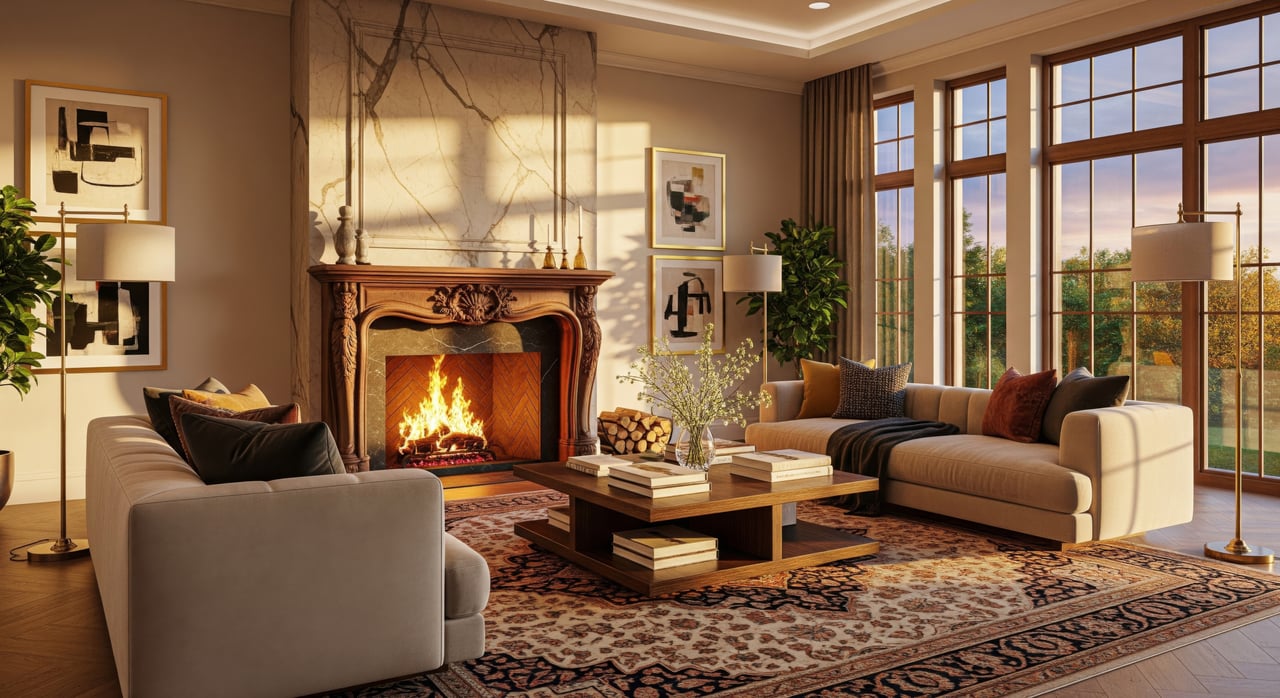
There is a particular kind of room that stops people mid-sentence. Not because it is new, or because every element coordinates perfectly, but because it feels like it has a life of its own. Something in it has clearly been somewhere. Something else was chosen with care. The whole adds up to more than the sum of its parts, and standing in it feels different from standing in a room where everything arrived in the same delivery truck.
That quality, long admired and historically difficult to define, now has a name in design circles: the collected look. And in spring 2026, it has moved from aspirational to essential.
The Shift From Showroom to Story
Vintage-inspired design has been circling the mainstream for a few years, but spring 2026 represents something more committed than a passing nod. Designers are advocating for what they describe as a collected quality, the sense that a space has been assembled thoughtfully over time rather than purchased all at once.
This is a meaningful distinction. The showroom aesthetic, in which every piece is new, everything matches, and the overall effect is impeccable but somehow airless, has lost its hold on the design conversation. In its place is an approach that values patina, proportion, and provenance as highly as it once valued polish and uniformity.
The appeal is not difficult to understand. A space that tells a story invites a response that a perfectly coordinated room simply cannot. It creates curiosity, warmth, and the sense that the people who live there have made real choices rather than simply deferred to a catalog.
The Art of the Intentional Juxtaposition
Embracing the collected look does not require filling a home with antiques, or commissioning an interior designer, or spending years hunting through estate sales. It means making intentional choices about how old and new coexist in the same space.
A weathered console table paired with a contemporary lamp. An antique oil painting alongside a modern sectional. Aged brassware in a kitchen that is otherwise entirely current. These juxtapositions create visual interest and emotional warmth that uniformly new interiors cannot achieve. The key word is intentional. The collected look is not about accumulation; it is about curation. One well-chosen piece with a genuine history can shift the entire feeling of a room.
What designers are responding to this season is the growing sophistication of buyers and homeowners who have grown weary of interiors that feel assembled by algorithm. The vintage element introduces the irreducible variable of human judgment, and that judgment, expressed in the right piece in the right place, is precisely what gives a space its soul.
What This Means for Your Home
For homeowners who are preparing to list, the takeaway is specific: do not strip a home of its character in an attempt to appeal to everyone. Buyers at the luxury and near-luxury tiers are not looking for a blank slate. They are looking for a home that gives them something to respond to.
This runs counter to the conventional staging wisdom that advocates for neutralizing everything, removing personal items, and presenting the most generic version of a space possible. That approach made sense when the priority was to avoid alienating buyers. The current luxury buyer, however, is not easily alienated by character. What alienates them is the absence of it.
Authentic, well-maintained character in a home is an asset, not a liability. A vintage light fixture in excellent condition, a stone fireplace surround with decades of honest wear, original millwork that has been properly cared for, these are selling points in 2026, not obstacles to be minimized. The collected quality that designers are advocating in editorial spaces is the same quality that luxury buyers are seeking in residential ones. A home that feels genuinely lived in and genuinely considered is a home that commands attention, and increasingly, commands a premium to match.
Sources:
- Spring 2026 interior design trend reporting (trade and editorial sources)