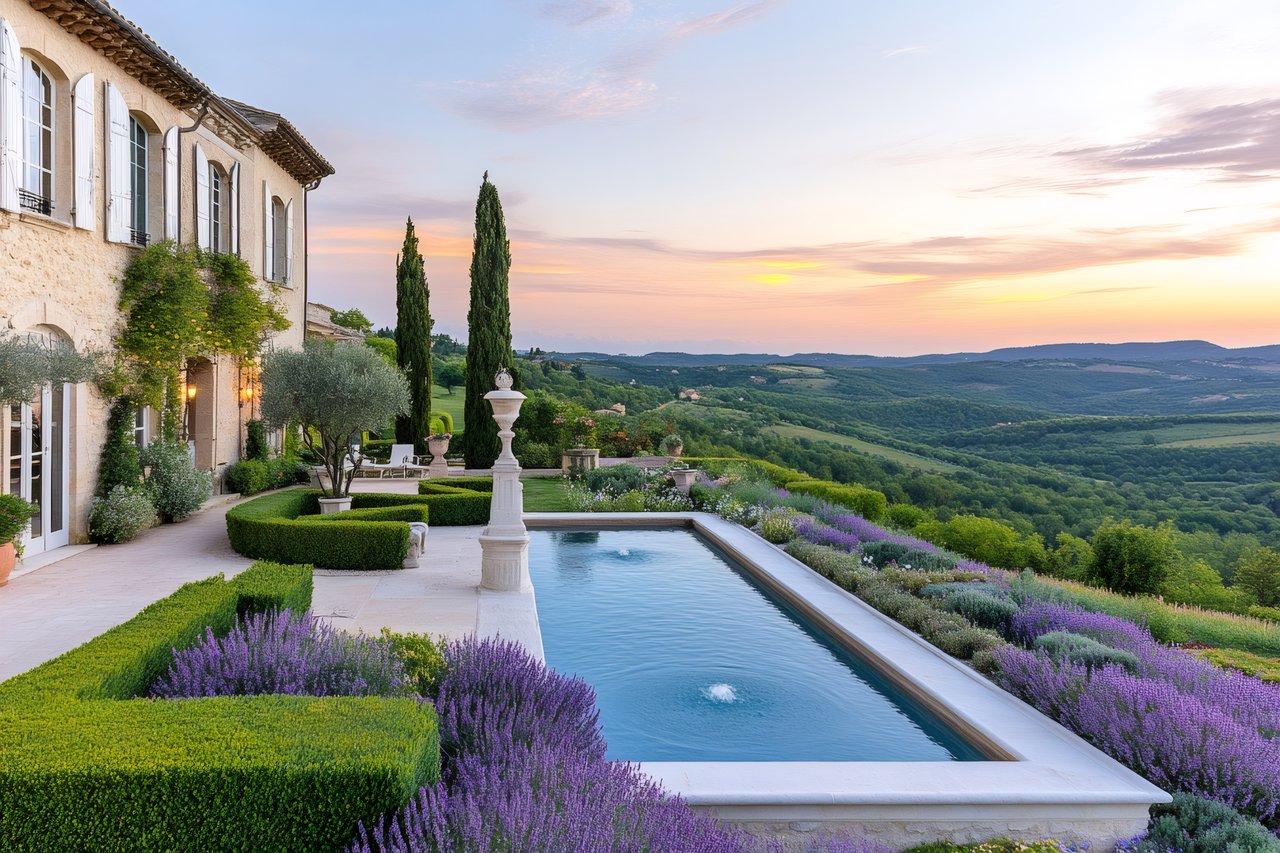
There is a particular kind of buyer who has always known that the world's most interesting real estate is not necessarily located in the city where they happen to live. These are the individuals who think in terms of lifestyle portfolios rather than single addresses, who view a property in Tuscany or a residence overlooking Lake Geneva not as an extravagance but as a logical extension of how they choose to allocate wealth. That buyer is increasingly active, and Europe's prime property markets are responding accordingly.
A confluence of factors has made European luxury real estate one of the more compelling conversations in global property circles right now. Residency programs tied to real estate investment, historically distinctive architectural inventory, the enduring appeal of lifestyle-driven locations, and a steady stream of North American capital crossing the Atlantic have all converged to create a market that rewards the informed and moves quickly for those who are not.
Italy: Where History Is the Amenity
Few markets in the world offer what Italy does, which is the opportunity to acquire property where the building itself may be centuries old and the surrounding landscape has been considered among the most beautiful on earth for considerably longer. The appeal of a vineyard estate in Tuscany or a hillside villa overlooking the Amalfi Coast operates on a register that new construction simply cannot replicate, and that scarcity of genuine historic character is precisely what drives premium pricing in the Italian market.
North American buyers have become increasingly active here, drawn by a combination of lifestyle aspiration and investment fundamentals. The Italian government has also made deliberate efforts to attract foreign capital through favorable flat-tax regimes for new residents, a policy that has quietly repositioned Italy as not only a romantic destination but a strategically sensible one for high-net-worth individuals restructuring their fiscal residency. All-cash transactions are the norm in this market, partly by preference and partly by practical necessity, as international financing carries complications that motivated buyers typically prefer to sidestep entirely.
The regions commanding the most sustained attention include Tuscany, Umbria, the Lake Como and Lake Garda corridors in the north, and the coastal stretches of Sicily, where international buyers have begun to recognize value that domestic market dynamics kept suppressed for years. In each case, what is for sale is not merely a structure but a way of life attached to it, and the buyers who understand that distinction are the ones making the most considered acquisitions.
Switzerland: Precision, Privacy, and Permanent Value
Switzerland occupies a unique position in the global luxury real estate conversation, and has for a very long time. Its combination of political neutrality, extraordinary financial infrastructure, breathtaking natural landscape, and a legal and regulatory environment that high-net-worth individuals find consistently legible has made it one of the world's most reliably desirable destinations for serious capital. The luxury property market here is not driven by trend. It is driven by conviction.
Prime Swiss addresses in Geneva, Zurich, and the alpine resort communities of Verbier, Gstaad, and St. Moritz represent a category of real estate where value preservation is essentially the primary product. Buyers are not speculating on dramatic appreciation. They are placing capital into assets that hold their worth across economic cycles, political shifts, and generational transitions. For the globally mobile buyer managing wealth across multiple jurisdictions, the logic of Swiss property ownership is largely self-evident.
It is worth noting that Switzerland maintains some of the most carefully managed foreign ownership restrictions in Europe, which has the effect of keeping the market constrained by design. Properties available to international buyers represent a genuinely limited inventory, and that limitation is itself a value proposition. What exists in this market does not flood, and what is coveted tends to remain so.
Germany: The Understated Case for European Stability
Germany does not typically appear at the top of the aspirational list when buyers begin imagining their ideal European property, and that relative underattention is something sophisticated investors have learned to view as an opportunity rather than a signal. The German luxury market, particularly in Munich, Hamburg, and the residential corridors surrounding Berlin, offers a combination of economic stability, transparent legal frameworks, and consistent long-term capital appreciation that compares favorably with more glamorous European destinations.
Munich in particular has emerged as one of Europe's most resilient luxury markets, supported by a concentration of high-income professionals, proximity to the Alps for lifestyle appeal, and a cultural infrastructure that competes with any major European city. The Bavarian capital's prime residential market has drawn increasing interest from international buyers who prioritize economic fundamentals alongside lifestyle, and who recognize that an address in a stable, prosperous, and beautifully maintained city carries its own form of long-term value.
Hamburg brings a different character entirely, with its cosmopolitan port heritage, strong financial and media sectors, and a residential market that has grown increasingly sophisticated in both product and pricing. For buyers who want genuine European urban living without the density pressures of Paris or the pricing heights of central London, Germany offers a compelling case.
What the Broader European Market Is Telling Us
The Mediterranean coastline continues to generate considerable activity, with Spain and Greece attracting buyers who combine lifestyle motivation with an eye on residency advantages. Both countries have operated golden visa programs that tie residency eligibility to real estate investment, and while those programs have undergone regulatory review and adjustment in recent years, the underlying appeal of owning coastal property in southern Europe has not diminished.
France remains in a category of its own, as it always has. A villa on the Côte d'Azur or an estate in Provence operates at a price point and a prestige level that the French market has sustained through multiple economic cycles, and international buyers continue to arrive with the expectation that premium French properties will deliver what they have always delivered: beauty, culture, gastronomy, and the particular satisfaction of owning something genuinely irreplaceable.
What connects these markets, from the Swiss Alps to the Sicilian coast to the banks of the Elbe in Hamburg, is a shared characteristic that distinguishes European luxury real estate from almost any other asset class. These properties carry history, culture, and a sense of permanence that new construction in even the most dynamic global cities cannot manufacture. For the buyer who understands that distinction, the European market is not simply an alternative to domestic real estate. It is a category of its own.
Navigating the European Market as an International Buyer
Purchasing property in Europe as an international buyer is not without its complexities, and understanding them before beginning the search is considerably more useful than discovering them mid-transaction. Legal frameworks vary significantly by country, foreign ownership restrictions apply in certain markets, tax implications affect both the acquisition and any eventual sale, and currency exposure adds a layer of consideration that domestic purchases do not require.
All-cash transactions are the standard at the luxury level across most European markets, both because financing options for international buyers are genuinely limited and because sellers in prime markets have no particular incentive to accommodate the delays and uncertainties that cross-border financing tends to introduce. Buyers who enter the European market with capital structured for speed and legal counsel familiar with the relevant jurisdiction are the ones who secure the properties worth having.
Working with advisors who have genuine international reach, relationships in the relevant markets, and the ability to connect a buyer's specific goals to the right property in the right location is not a luxury in this context. It is a prerequisite.