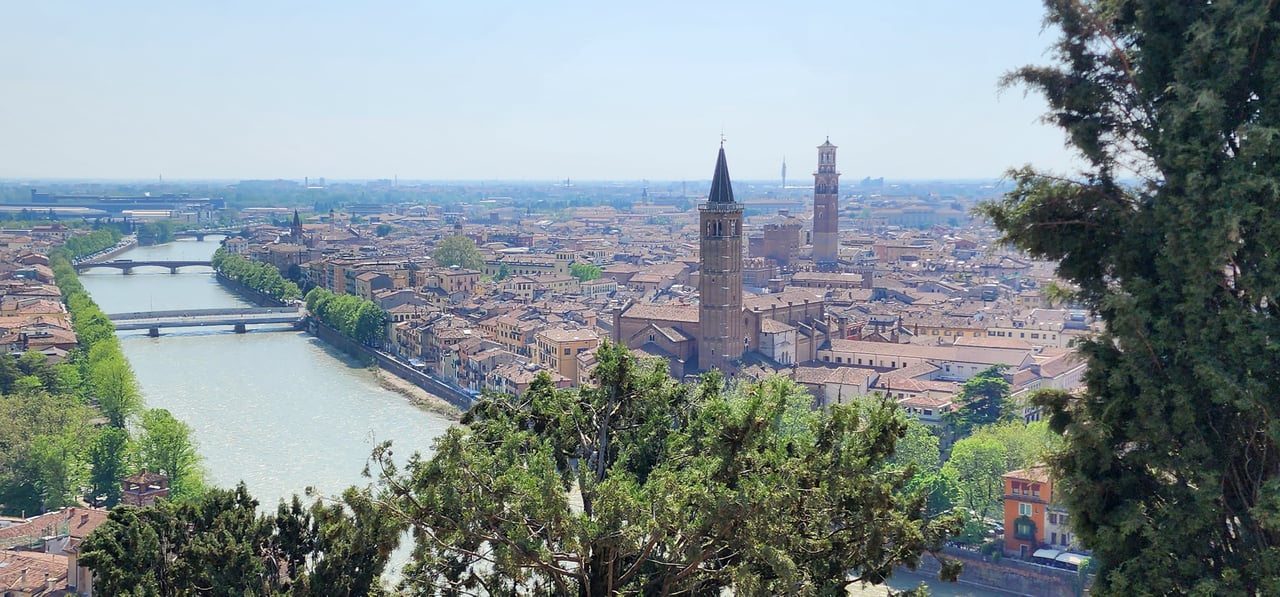
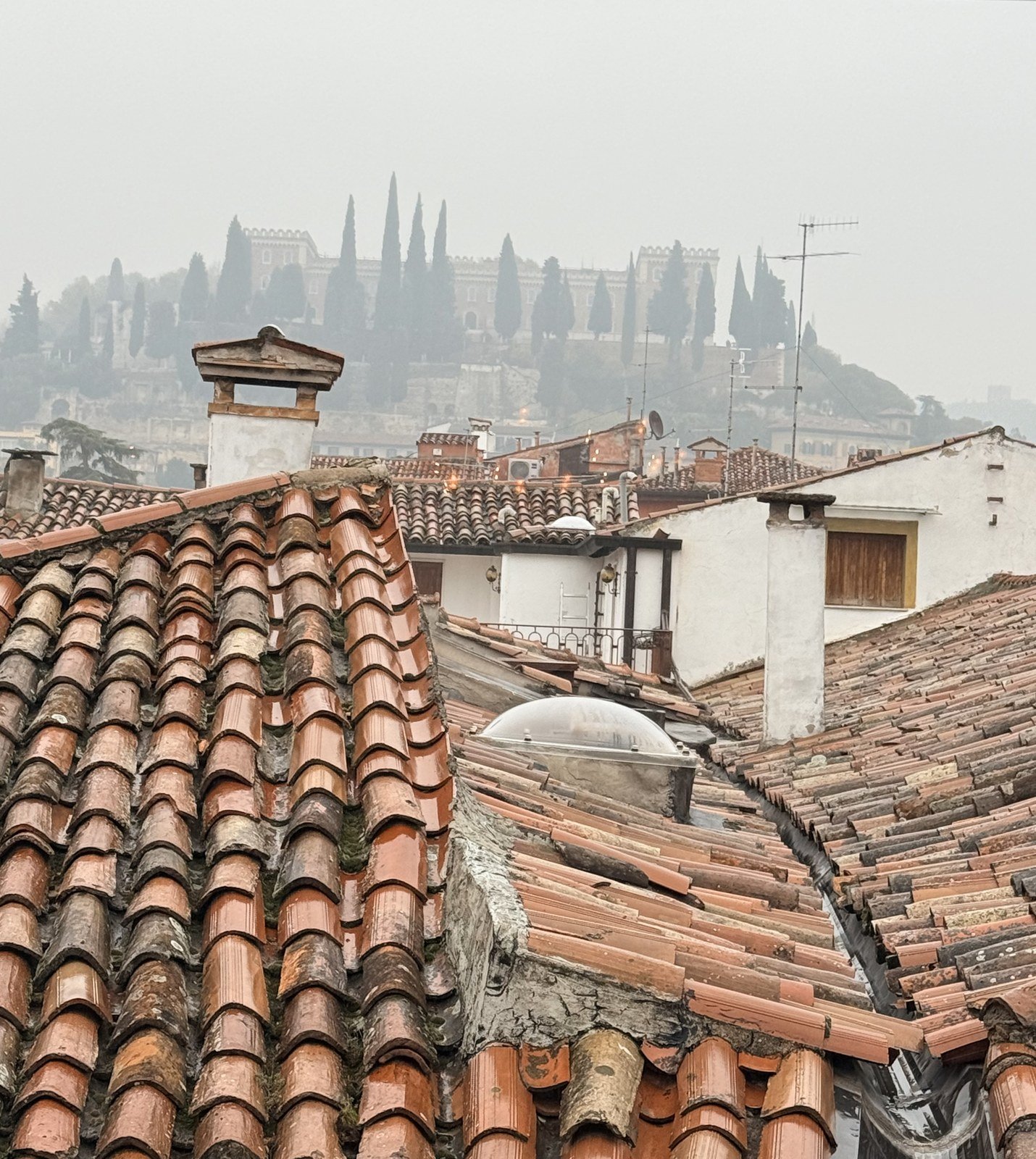
Terracotta rooftops along the Adige, vineyards climbing the foothills, a lakeshore of olive groves and castle towers. Verona and its province fit city life, wine country and lake living into one compact map, and that mix is the heart of their appeal for buyers considering a second home in northern Italy.
On a morning walk along the Adige this week, that mix is easy to feel.
A city built on layers
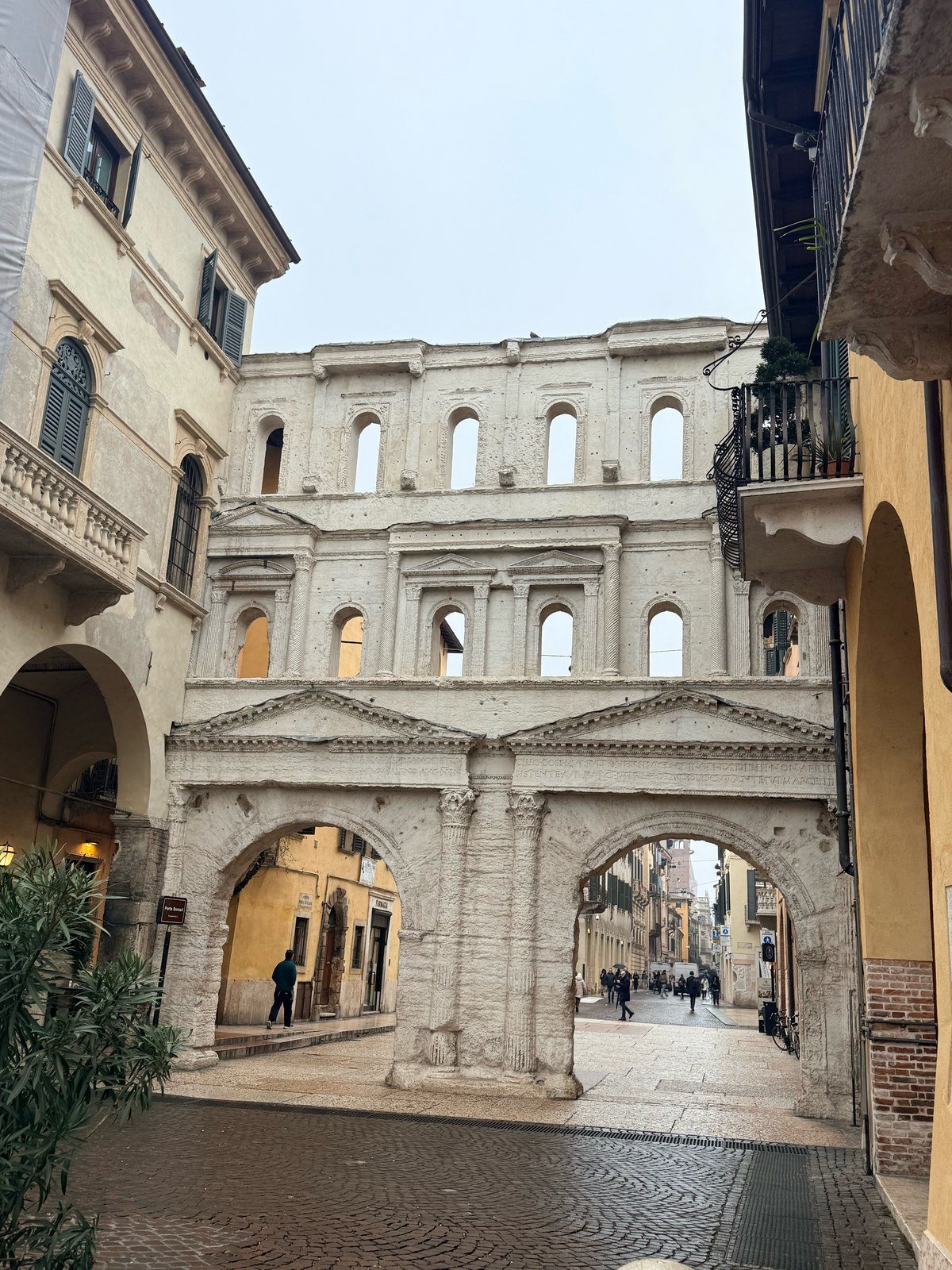
UNESCO added the historic City of Verona to its World Heritage List in 2000. Its description traces a Roman town tucked into a loop of the river, later shaped by the Scaliger lords and then by four centuries within the Republic of Venice, which took the city in 1405. The Roman layer is still part of daily life: Ponte Pietra, Porta Borsari, the Roman theater and the Arena, the amphitheater that in 2026 hosted the closing ceremony of the Milan Cortina Winter Olympics on February 22 and the opening of the Paralympic Winter Games on March 6. Piazza delle Erbe, with its market stalls, remains the everyday heart of the old town.
Where people live in the city
Verona's most desired addresses sit close to the river. The figures here come from Italy's official property market observatory, the OMI, run by the national tax agency, which publishes value ranges for each zone drawn mainly from recorded sales and reviewed by the agency's own appraisers. They refer to standard homes in normal condition for the first half of 2026, converted to US dollars per square foot at the European Central Bank reference rate at the time of writing.
The Centro Storico, the old town within the river bend, sits at the top of these zones, with values of about $358 to $481 per square foot. Homes here are often in historic buildings, some of them with frescoed facades.
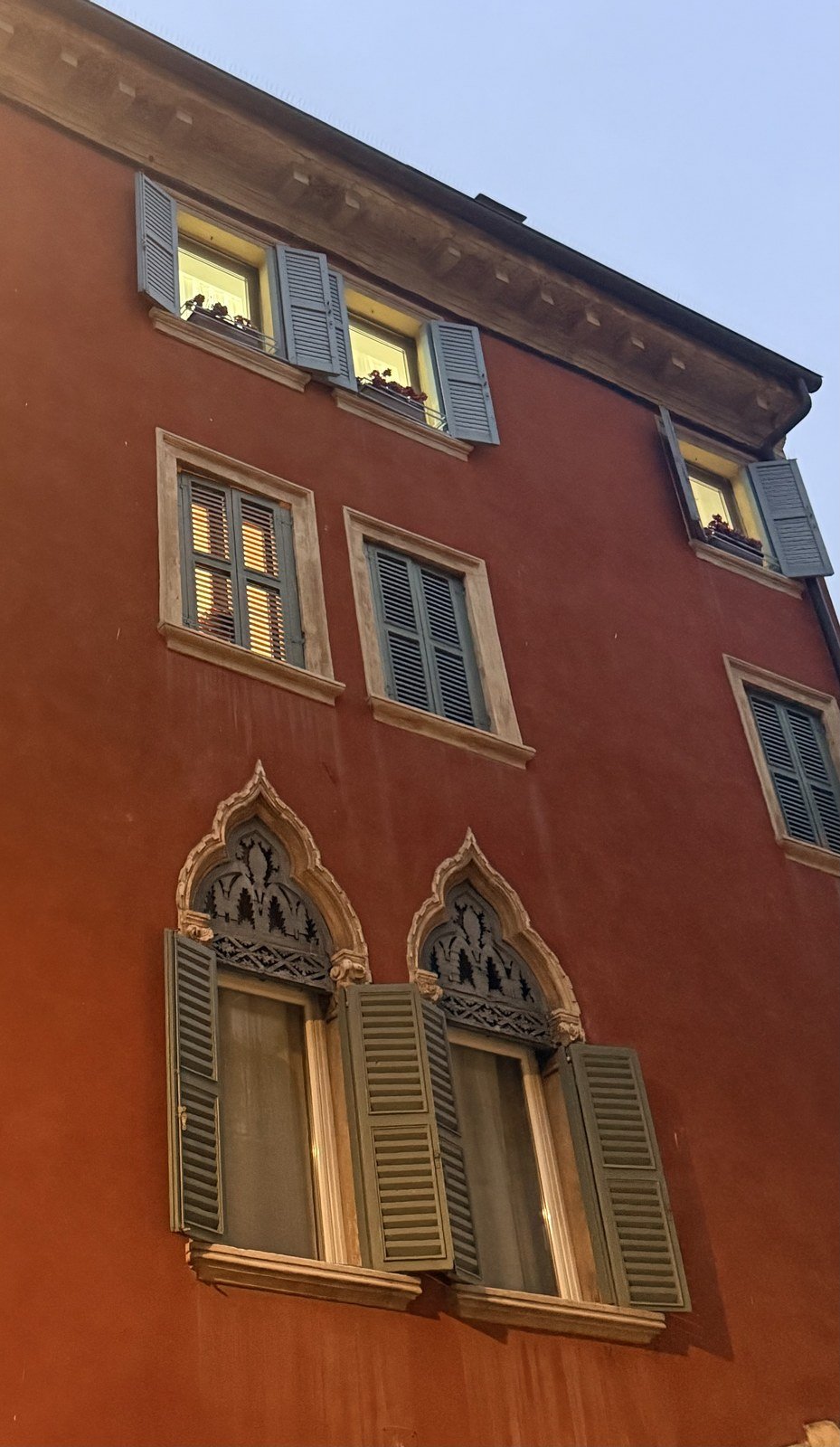
Across Ponte Garibaldi, a short walk from the cathedral, Borgo Trento is a residential district first built up around the turn of the 20th century, home to the city's main hospital and the heart of Verona's Liberty style, the Italian take on Art Nouveau. The observatory groups it with Pindemonte and Valdonega at about $307 to $348 per square foot. Veronetta, across the Adige from the old center, runs about $256 to $327, and San Zeno, around its Romanesque basilica, about $266 to $358, both generally below the historic core.
At the foot of the hills just northeast of the old town, Valdonega grew in the early 20th century as a garden suburb of small villas set among trees, on the English garden city model, though much of it was built up after the war. In 1957, building work there uncovered a Roman villa from the first century with mosaic floors and frescoes, which can still be visited by appointment. In Valdonega's zone, the observatory values villas at about $399 to $501 per square foot, while the semicentral zone that takes in Avesa, Quinzano, Parona and the first hills north of the city runs about $205 to $235 for standard homes.
These are reference ranges rather than prices for any single home, and a restored palazzo floor or a villa with a large garden can sit outside them.
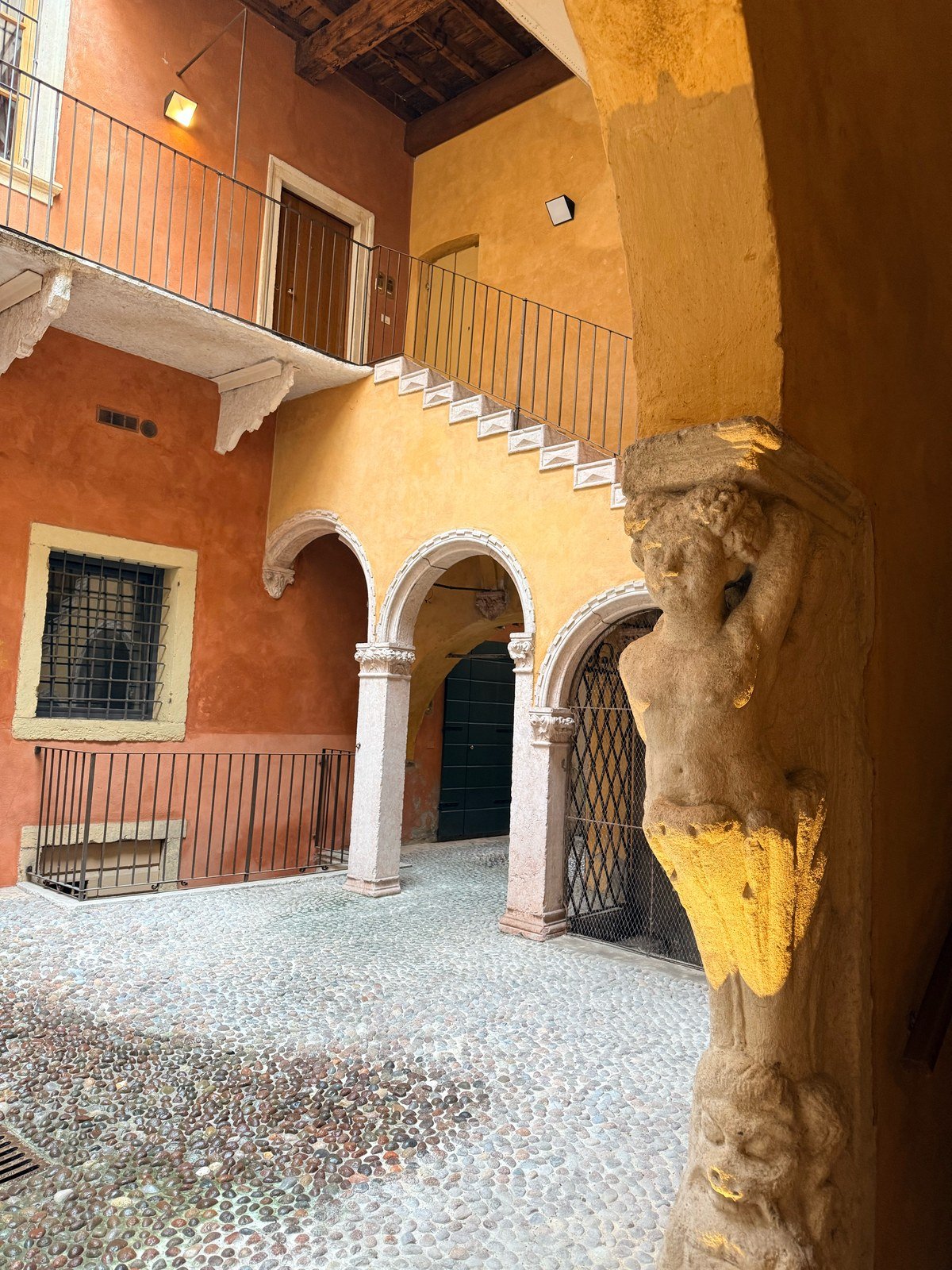
International buyers, especially from the United States, often come to Verona for historic character rather than new development. In the old palaces, that usually means a noble floor (the most prestigious level in a historic building, with high ceilings and original frescoes), along with beamed ceilings, a distinctive Veronese feature, and the windows divided into three arched lights, known as trifore, typical of historic palaces in Verona and other cities in the Veneto. Many also look across the Adige for a southern exposure and open river views, a setting that has long drawn both Italian and international buyers to districts such as Borgo Trento. The historic center remains the first stop for those who want everyday life within a short walk of Piazza delle Erbe and the Arena.
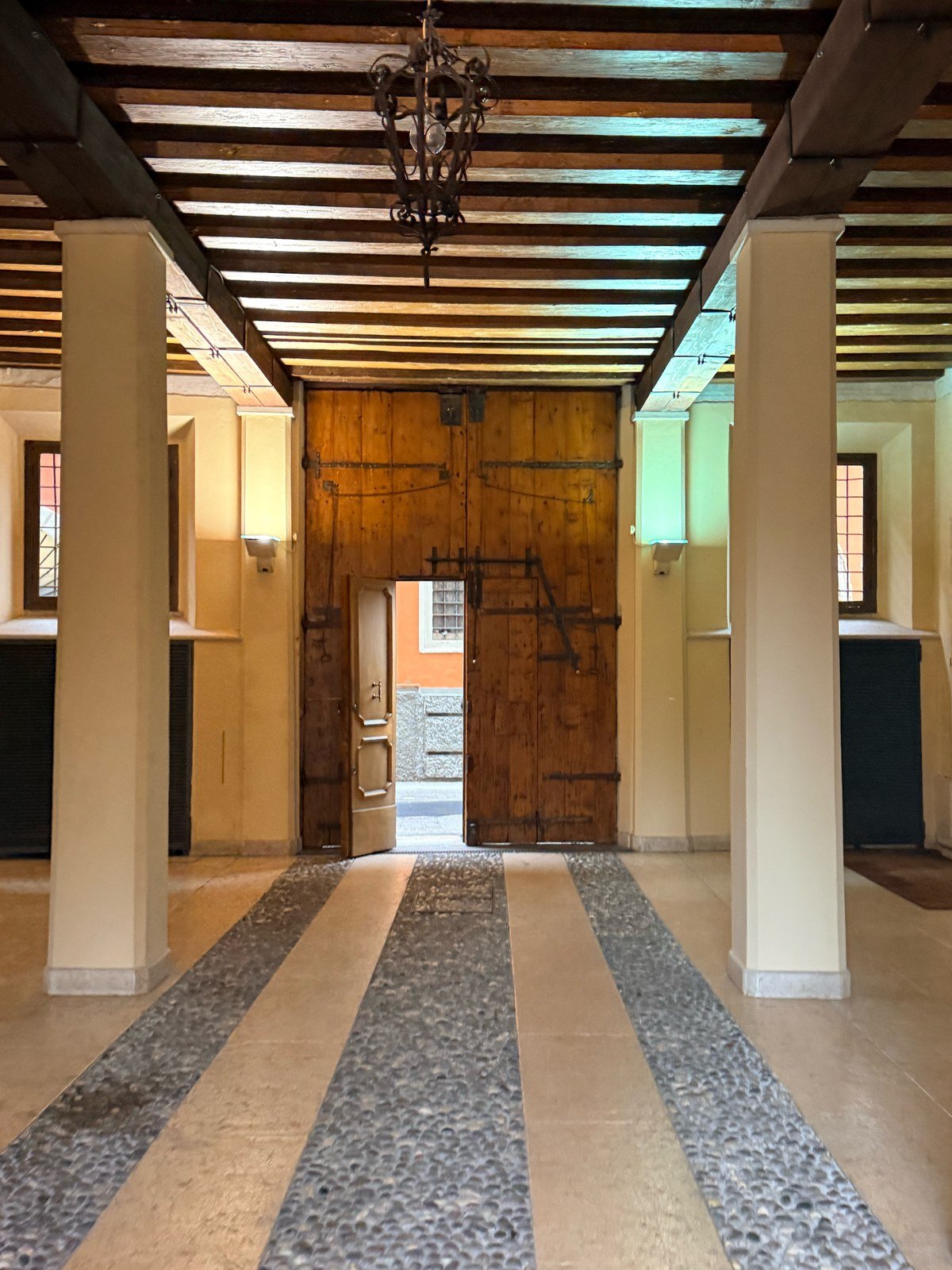
Parking in the historic center is part of the purchase, not an afterthought. Many palaces were built long before the automobile, so a garage, when there is one, may be a single space, a mechanical lift that stores more than one car, or a separate space that has to be acquired on its own. Historic palaces may also be subject to Italy's heritage superintendency, which can shape what may be altered. Those details are best reviewed property by property.
Lake Garda's Veneto shore
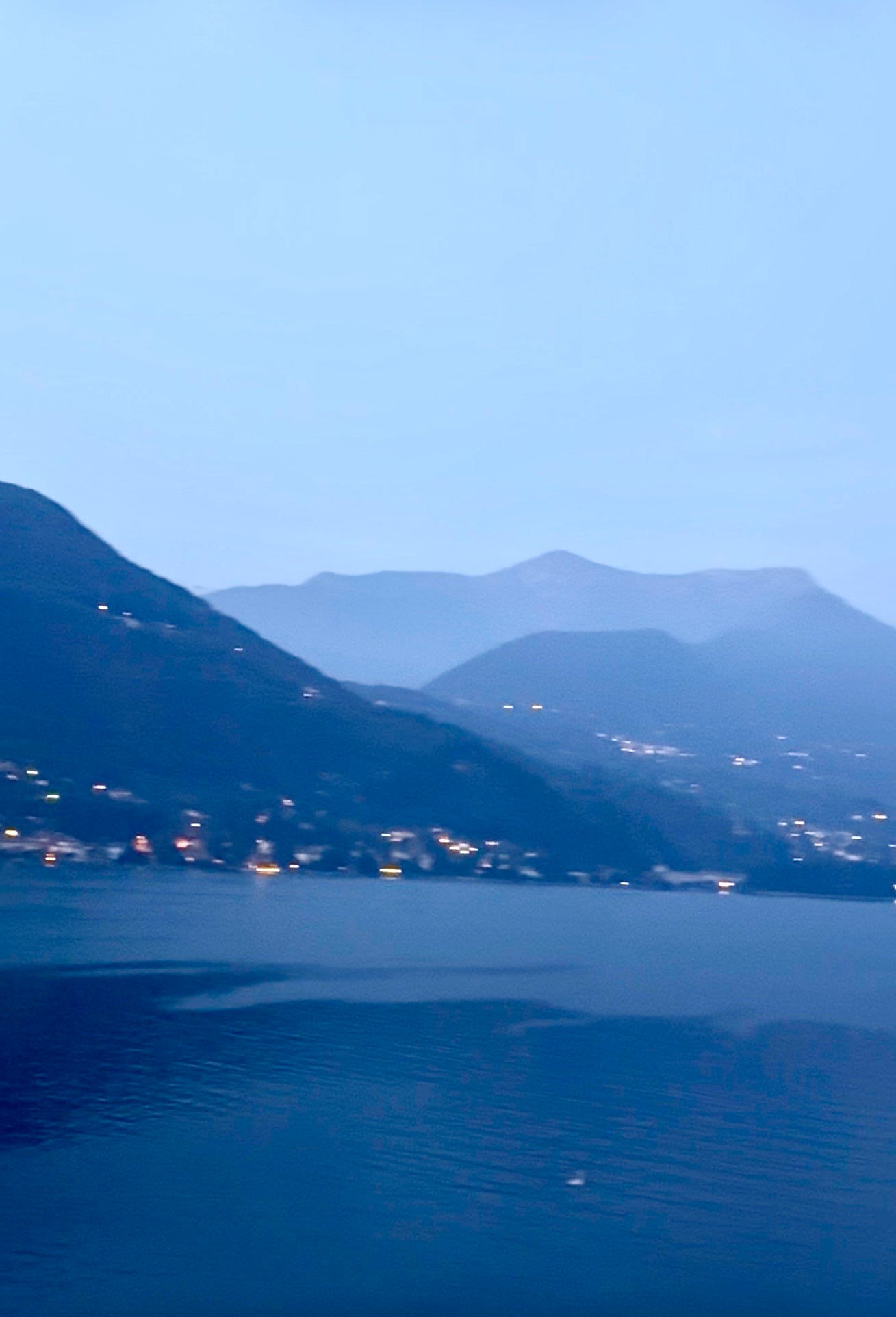
West of the city, the eastern shore of Lake Garda belongs to the province of Verona and holds some of its highest values. In the observatory's town center and lakeside zones, standard homes run about $338 to $481 per square foot in Torri del Benaco, $358 to $512 in Bardolino, $368 to $553 in Malcesine, $297 to $409 in Garda and $302 to $450 in Lazise. Villas reach higher still, about $553 to $798 per square foot in Malcesine's prime lakeside zone and $440 to $614 in Bardolino's.
The appeal is easy to see. The official Lago di Garda Veneto tourism board describes a shore of medieval villages and castles, olive trees a century old and citrus groves, with sailing, climbing and cycling close at hand. In Malcesine, beneath the steep western flank of Monte Baldo, the Scaliger Castle rises above the water; the town's records trace its name to the della Scala lords, who held it from 1277 to 1387, and it has been a National Monument since 1902.
The lake has two shores, each with its own character. The eastern shore, in the province of Verona, is the Veneto side described above: castle towns, olive groves and a straightforward connection to the city. The western, Brescian shore runs from Desenzano del Garda toward Salò and Gardone Riviera, and is known for its architecture, its dining and the Vittoriale, Gabriele D'Annunzio's house and museum at Gardone. International buyers often look at both.
Interest at the top of the market extends across the lake, including the Lombard shore as well as the Veneto towns described above.
Valpolicella and Soave: the wine hills
North of the city lie the Valpolicella hills. The wine consortium, founded in 1925, represents producers across 19 municipalities in the province. The area's signature, Amarone della Valpolicella, comes from selected grapes dried for about 100 to 120 days in airy lofts called fruttai, then vinified in winter and aged at length in wood. Country houses sit among the vineyards, and values are well below the lake's: in the central zones of San Pietro in Cariano and Negrar di Valpolicella, the observatory puts standard homes at about $128 to $184 and $143 to $205 per square foot.
East of the city, the Soave hills are the white wine side of the province. Soave received its controlled designation of origin in 1968, Garganega is its principal grape, and the historic Classico zone lies in the hills of Soave and Monteforte d'Alpone, on volcanic and limestone soils. In the town of Soave, standard homes run about $113 to $164 per square foot.
Further afield: Asolo, the Prosecco hills and Lessinia
Within reach of Verona, the Veneto opens onto quieter landscapes for buyers who want more space. The hill town of Asolo, in the province of Treviso, has values of about $184 to $297 per square foot in its prime central zone, and the same Treviso countryside holds Palladio's Villa Barbaro at Maser, frescoed by Paolo Veronese and one of the villas in UNESCO's City of Vicenza and the Palladian Villas of the Veneto. The Prosecco hills of Conegliano and Valdobbiadene joined the World Heritage List in 2019, recognized for steep hogback hills, small vineyard terraces called ciglioni and a patchwork of woods and villages.
Closer to the city, in the northern part of the province of Verona, the Lessinia Regional Nature Park, created in 1990, covers more than 24,700 acres of high plateau, karst landscapes, fossil sites and walking trails, with mountain pastures known for Monte Veronese cheese.
What the market is saying
International buyers, including many from the United States, are an important part of demand in Verona and around the lake.
Some of the most interesting homes in Verona are never advertised. Some owners prefer to keep a sale private, and those private opportunities are usually shared by introduction. If Verona is on your list, I would love to include you in that conversation.
Buying as an American
Americans can generally buy residential property in Italy, but the path from first offer to final deed has its own steps, paperwork and costs, and some commitments come earlier than many US buyers expect. Taxes and fees also depend on who is selling, and moving to Italy is a separate set of questions. A private consultation is the best place to walk through how it all works for your own plans, well before anything is signed.
A closing note
Having just visited Verona, I can see why it suits buyers who want more than one way to live: a historic apartment a short walk from the Arena, a lakeside home with a view of Monte Baldo or a country house among the vines. As a Certified International Property Specialist (CIPS), I help you set clear priorities and a budget that covers the full cost of buying, and I can introduce you to trusted real estate colleagues in the Sotheby's International Realty network and to qualified advisers in Italy. If this corner of Italy is calling you, I would love to hear from you at www.NikaLeoni.com.
General information only, not legal, tax or immigration advice.