Bright green oil poured over warm bread, a crackle of chestnuts by the fire, mist lifting off the vineyards by mid-morning. By November, the tour buses have thinned out and the Tuscan countryside goes back to its own rhythm. For anyone thinking about a home in Italy, it is one of the most revealing times of the year to see the region.
Why November
Neither white truffles nor new oil belongs to November alone. Under Tuscan regional law, the white truffle season runs from October 1 to January 15, and the olive harvest starts in October, with Toscano IGP olives picked by December 15. November is when the two seasons peak together. The mills are at their busiest, white truffle fairs fill hill towns on the weekends and Montalcino presents its new wines, all after the summer crowds have gone.
The season of olio nuovo
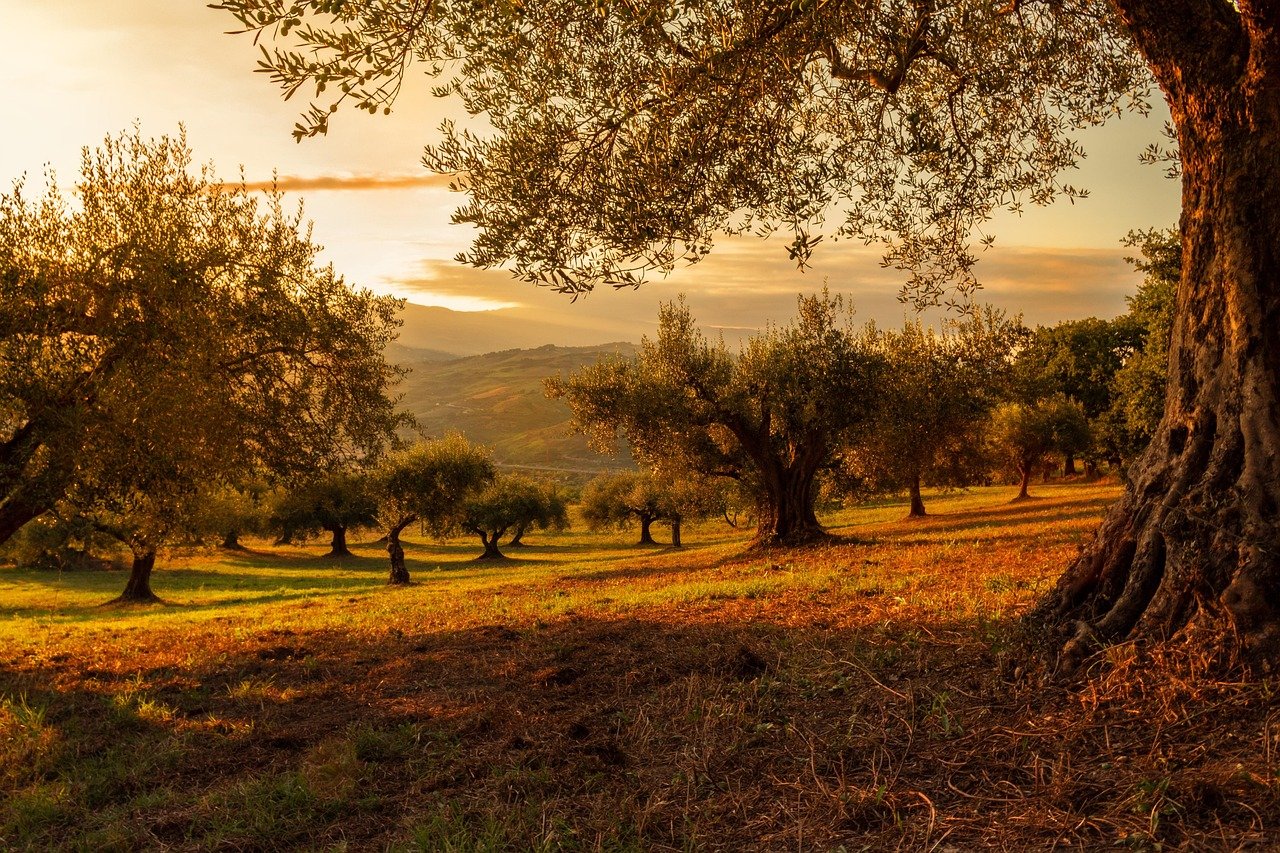
Late October and November belong to the olive harvest. Families and estates bring in their olives and press them within days, and the first oil of the year, the olio nuovo, arrives peppery, cloudy and green. Towns celebrate it openly. Just east of Lucca, the municipality of Capannori is running its first "Olio Nòvo" program, a calendar of mill openings, tastings and dinners that continues into January 2027. On Sunday, November 22, farms and olive mills across its northern hills open to the public from morning to early evening, with free tastings of the new oil and a free shuttle from the Centro Commerciale Collodi in Gragnano. Two local restaurants serve menus built around Capannori oil until January 15, and others hold oil dinners and tastings through November.
For a future owner, this is more than a pleasant outing. A morning at a frantoio (olive mill) shows how a property with olive trees really works: who harvests, where the olives are pressed, and what a few hundred trees mean in labor and in oil.
White truffle weekends in the Crete Senesi and San Miniato
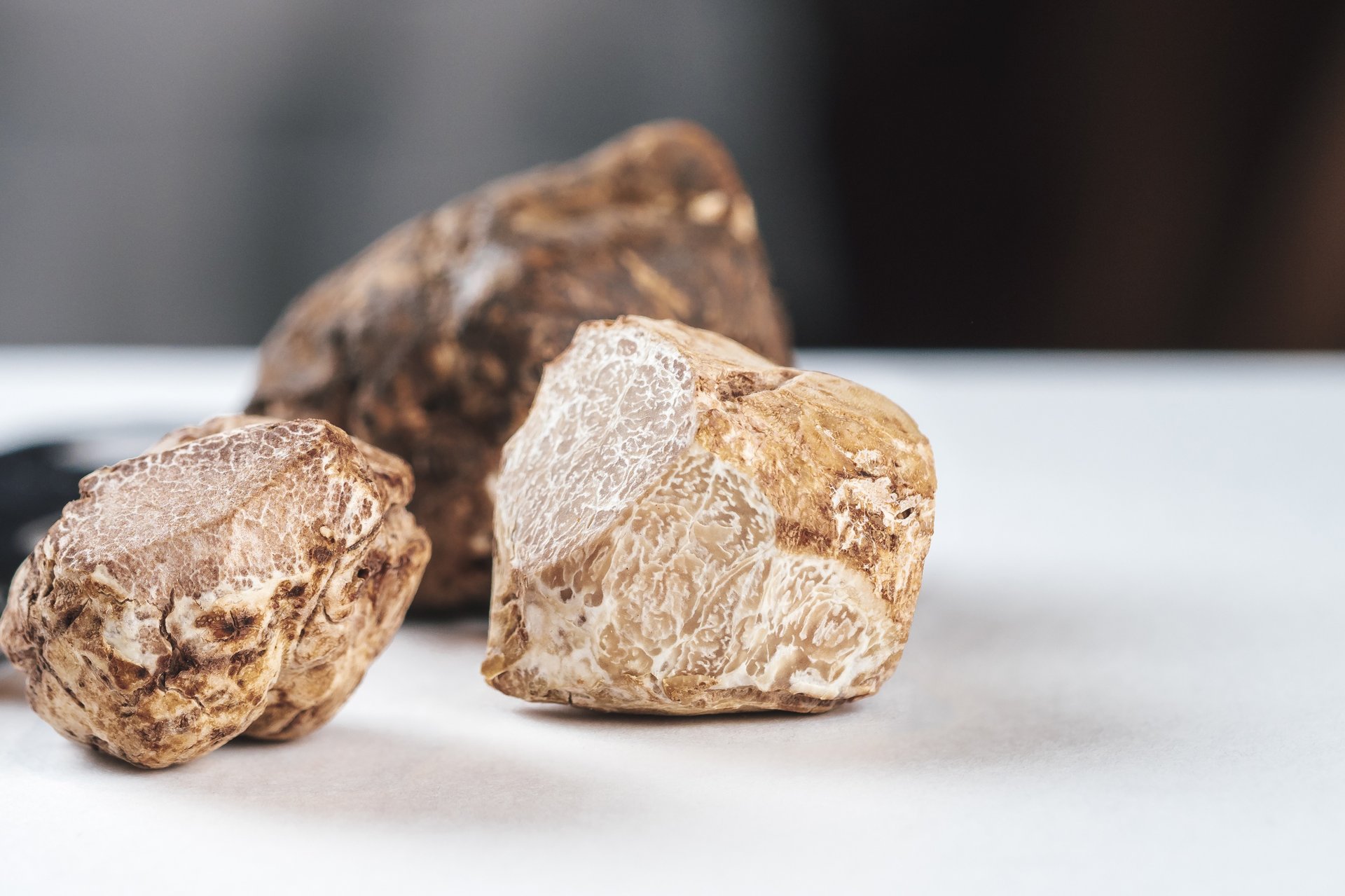
South of Siena, in the Crete Senesi, the village of San Giovanni d'Asso closes its 40th white truffle fair on November 14 and 15, with truffle-hunting demonstrations, cooking demonstrations and a market selling truffles gathered by members of the local truffle hunters' association.
Farther north, halfway between Florence and Pisa, the hilltop town of San Miniato holds its 55th white truffle fair over the last three weekends of the month: November 14-15, 21-22 and 28-29. The historic center fills with truffle stalls, tastings and food events. Private cars cannot drive up to the historic center during the fair, so the shuttle is the way in. It is a lively way to spend a Saturday, and a reminder that Tuscan life runs well past the summer season.
New vintages in Montalcino
Montalcino presents its new wines at Benvenuto Brunello, the Brunello consortium's annual preview, now in its 35th edition, from November 19 to 23 in the cloister of Sant'Agostino. The first two days are reserved for the press. From Saturday, November 21, the producers pour Brunello di Montalcino 2022, Brunello Riserva 2021 and Rosso di Montalcino 2025 at walk-around tastings open to wine lovers as well as the trade, ahead of the wines' commercial release in January 2027. The consortium's website posts the program as details are confirmed.
What the market is saying
Beyond the seasonal appeal, Tuscany's property market offers another reason for international buyers to pay attention. Immobiliare.it puts the average asking price for homes across Tuscany at about 2,700 euros per square meter in September 2026, up 4.9 percent from a year earlier. By province, the same Immobiliare.it September figures put Lucca highest in the region at about 3,778 euros per square meter, up 7.9 percent, followed by the province of Florence at about 3,391 euros, up 3.9 percent. The city of Florence on its own runs higher: the third-quarter 2026 report from Immobiliare.it Insights, which uses its own dataset, places it at about 4,780 euros per square meter, the most expensive provincial capital in Tuscany.
At the prime end, Knight Frank's research points the same way. Its August 2026 analysis found that 1 million euros buys roughly 79 to 89 square meters in prime cities such as Rome and Florence, and about 126 to 130 square meters in lifestyle markets such as Venice and Lucca, well beyond what the same budget buys in Paris or London. Prime prices in Florence rose about 18 percent over the three years to 2025. In its September 2026 European Residential Signals report, Knight Frank adds that its own completed prime sales in Italy more than doubled in the first eight months of 2026 compared with the same period of 2025, and that multiple prospective buyers are scheduled for viewings this autumn.
Who is buying? Knight Frank's Tuscany market report for the third quarter of 2026 lists the United Kingdom, the United States and France as the top international prime buyer nationalities in Tuscany in 2025. Nationally, Italy Sotheby's International Realty named the United States (19 percent), Germany (11 percent) and the United Kingdom (9 percent) among its key international markets for demand in 2025, with strong interest in turnkey homes, privacy and outdoor space.
Why the quieter months work for buyers
Summer is beautiful in Tuscany, but it can be a difficult time to judge a house. Late autumn shows a property as it really lives. A viewing in this season reveals how the roads behave after rain, whether the rooms hold warmth, how the light falls on a north-facing terrace and what the village feels like once the tour groups have gone home. Owners and local agents also tend to have more time for unhurried viewings once the high season ends.
A practical note for US buyers
Buying in Italy is manageable with the right team, and the usual steps are well established. Every purchase is different, so the points below are worth confirming with a lawyer or notary for each transaction.
- Eligibility. US citizens can generally buy property in Italy. For non-EU buyers, the notary checks any reciprocity requirement for the specific purchase.
- Tax code first. Every buyer needs a codice fiscale, the Italian tax number, issued by the Agenzia delle Entrate.
- The usual stages. Most purchases move from a signed offer to a preliminary contract (compromesso) and then to the deed (rogito), drawn up and read by a notary. The preliminary contract is common but not required in every sale. Any deposit is negotiated between the parties, and the contract should say whether it is a caparra confirmatoria or an advance on the price.
- Taxes. For a second home bought from a private seller, registration tax is generally 9 percent, with a minimum of 1,000 euros, plus fixed mortgage and cadastral taxes of 50 euros each. For eligible residential purchases, when the buyer is a private individual and the sale is subject to registration tax rather than VAT, the buyer can ask the notary, in the deed itself, to calculate the tax on the property's cadastral (tax) value instead of the sale price. This is the prezzo-valore rule, and it often lowers the bill. Agricultural land bought with a house, such as an olive grove, is usually taxed separately and at a higher rate, so ask the notary how it will be treated. A purchase from a builder or other company is not automatically subject to VAT; that depends on the seller and the transaction, for example whether a builder is selling within five years of completion.
- Residency is a separate decision. Italy's optional flat tax on foreign income rose to 300,000 euros a year for people who move their tax residence to Italy from January 1, 2026. It applies only to those who relocate and meet its conditions, not to property buyers in general.
The olive mills, the truffle fairs and the new vintages say as much about a place as any listing sheet. If Tuscany is on your list, the quieter months are a good time to look closely, and an even better time to start planning.
If Tuscany is on your list, I can help you prepare before your search begins. As a Global Real Estate Advisor with Dielmann Sotheby's International Realty and a Certified International Property Specialist (CIPS), I work with US buyers to set priorities, build a budget with the full cost picture, and connect with trusted Sotheby's International Realty colleagues in Tuscany, along with English-speaking notaries, lawyers and surveyors who know the area. You can learn more at www.NikaLeoni.com.
With warmth,
Nika Leoni
Global Real Estate Advisor | Dielmann Sotheby's International Realty
Nika Leoni, Global Real Estate Advisor, is licensed in Missouri with Dielmann Sotheby's International Realty. General information only, not legal, tax or immigration advice. Sotheby's International Realty® and the Sotheby's International Realty Logo are service marks licensed to Sotheby's International Realty Affiliates LLC and used with permission. Each Office Is Independently Owned And Operated. Equal Housing Opportunity.