You've found the lot. Maybe it's 1.6 acres backing up to woods, maybe it's a corner parcel two streets off Clayton Road, but the house on it is wrong. Too small, too dated, too something. Your agent tells you the zoning allows for what you want to build. What nobody tells you, until you're three weeks into a contract with a due diligence clock running, is that zoning was never the part that would slow you down.
In Frontenac, the acre you're buying gives you room. It doesn't give you speed.
The Board You Meet Before You Meet the City's Board
Most people assume that once you own the lot, your first stop is the city's Architectural Review Board. It isn't. If your property sits inside one of Frontenac's private subdivisions, and most of the city's roughly 1,335 homes do, the Architectural Review Board will not vote on your project until your subdivision's own Board of Trustees has reviewed it first. The city's building code goes further: before a building official will even accept your permit application for construction, alteration, or repair, you need written confirmation that the trustees reviewed the work, submitted along with your application.
That means your actual first meeting isn't with the city at all. It's with a group of your future neighbors, operating under whatever covenants your specific subdivision has on file, on whatever schedule they happen to keep. Only after that box is checked does your file move to the city's process.
Two Calendars, One Timeline
Once you clear the trustees, you're on the Architectural Review Board's schedule, and that schedule is tighter than most buyers expect. The board meets the first and third Thursday of the month, 8:30 a.m., and it will not vote on a project without full construction plans in hand. No sketches, no concepts, no "we'll firm up the elevations later." Full plans, or you wait for the next meeting.
Stack the two requirements together and the math gets real. Miss the trustee window by a few days and you've likely missed the next ARB meeting too, since the board won't touch an incomplete file. A process that looks like a formality on paper can add weeks to a timeline that your contract's inspection period was never built to absorb.
What You're Actually Allowed to Build Depends on Which Half of Frontenac You're In
Layer zoning on top of the approval sequence and the picture sharpens. Frontenac splits its residential land into two districts with meaningfully different rules for how much of your lot has to stay open.
| R-1 (One-Acre Residence District) | R-2 (Residence District) | |
|---|---|---|
| Minimum lot size | 1 acre | 7,500 square feet |
| Minimum green space | 60% of the lot | 55% of the front yard |
| Side yard rule | Standard setbacks apply | No impervious surface allowed in the side yard strip except a fence or wall the ARB has approved |
A one-acre R-1 buyer has more square footage to negotiate with the board over, but also a stricter green space floor to hit. An R-2 buyer working a smaller lot has less room to maneuver on the front yard specifically, and any hardscape along the side yard needs board sign-off even if it's just a retaining wall. Neither district gives you a blank envelope. Both route back through the same twice-monthly board.
The Detail That Catches People Off Guard: The Model
Here's the piece that surprises even buyers who've done renovations elsewhere. The Architectural Review Board can require, at its own discretion, a physical study model of your proposed project, built to a scale of no less than one-eighth inch to the foot. It's waived for smaller additions and modifications under 400 square feet, but for anything larger, you may be building a scale model of your own house before you're allowed to build the actual thing.
This isn't a rubber stamp process and it isn't meant to be. The board's stated purpose is to keep new construction in step with the character of the surrounding street, which is part of what makes Frontenac's estate rows read as cohesive rather than like a patchwork of unrelated architectural statements. The tradeoff is a longer runway to approval than a buyer moving from a city with a single sign-off might expect.
What This Means for Your Contract, Not Just Your Contractor
If you're under contract on a Frontenac property with renovation or rebuild plans, the practical takeaway isn't to avoid the process. It's to price the calendar into your timeline before you waive anything.
- Ask for the subdivision's covenant book and trustee contact during your due diligence period, not after closing. You want to know who reviews plans and how often they meet before you're locked in.
- Have your construction plans further along than you'd normally need them before you submit anywhere, since the ARB won't open a file on partial drawings.
- Build the twice-monthly ARB cadence into your renovation timeline explicitly. If you miss a Thursday, you're not waiting a few days. You're waiting roughly two weeks for the next meeting, longer if your file isn't complete when you arrive.
- If your project is larger in scope, ask early whether a study model will be required. It's better to hear that answer in month one than to discover it after you thought you were done submitting.
None of this changes what you're allowed to build. It changes how much runway you need to actually build it.
What the Other Side of the Process Looks Like
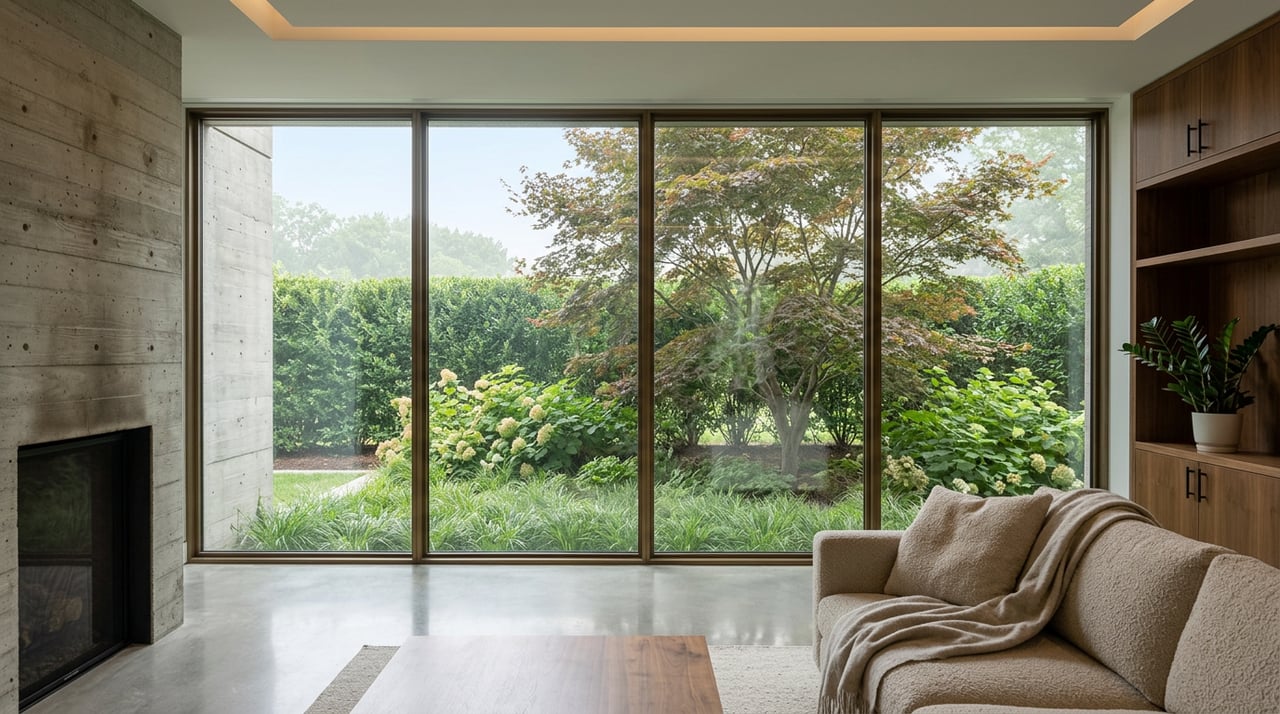
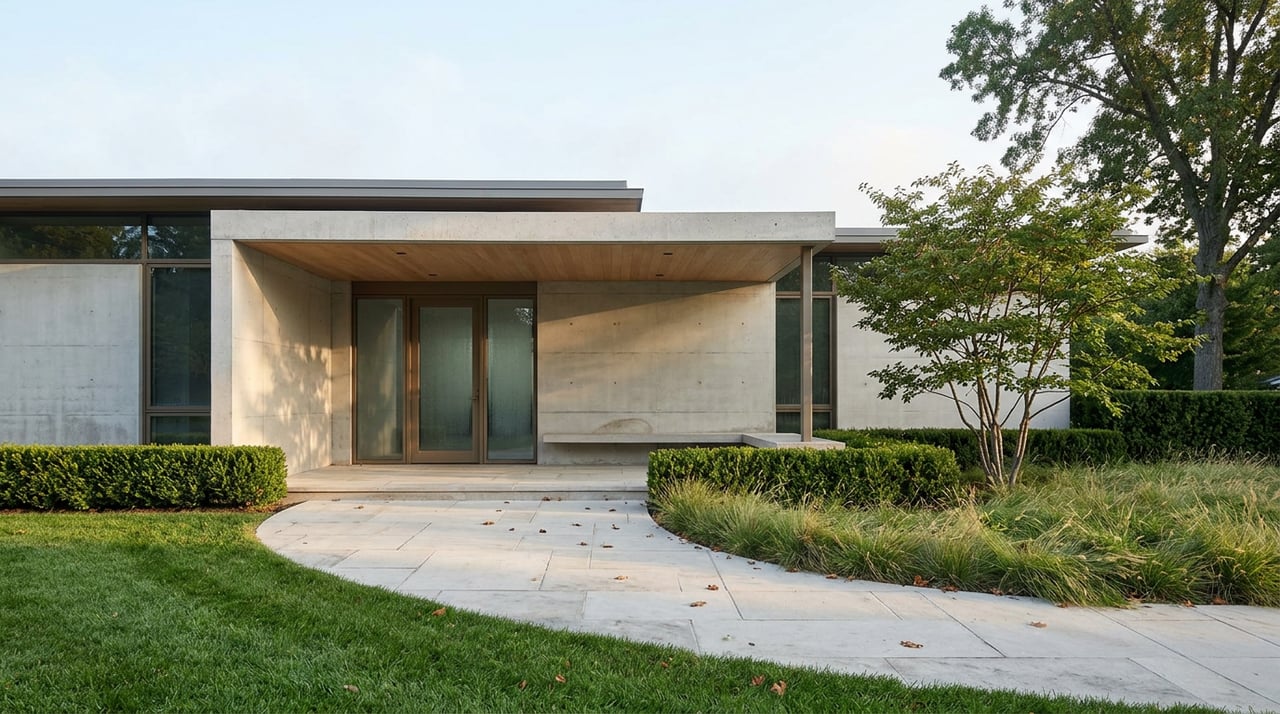
It's worth seeing what a fully realized Frontenac estate looks like once it's cleared both boards. A 1.658-acre property on Countryside Lane, backing to deep woods, recently came to market listed near $3 million. The home was designed by Robert Srote of Srote & Co. Architects and built in 2017 by R.G. Apel, with seven bedrooms, eight full bathrooms, and a 5,500-gallon aquarium believed to be the largest residential aquarium in the state. That's not a typical result, but it's a useful marker. Projects that go through Frontenac's process at this scale don't happen on a weekend timeline, and the ones that turn out well are the ones where the owner treated the trustee and ARB steps as part of the build schedule from day one, not an afterthought squeezed in after the framing crew was already booked.
A Few Questions Worth Asking Before You Sign
Do I need trustee and ARB approval if I'm only changing something inside the house? The board's review covers exterior architectural features and signage. Interior-only work that doesn't touch the outside of the structure falls outside what triggers the trustee and ARB sequence, though your standard building permit still applies.
What if my subdivision doesn't have an active Board of Trustees? Not every Frontenac property sits inside a subdivision with a governing trustee body. If yours doesn't, that step of the sequence doesn't apply to you, but it's worth confirming in writing during due diligence rather than assuming.
Are small projects like fence repairs or a new generator subject to the same process? Projects that replace or repair existing fences, generators, or HVAC units without changing the outward appearance of the building are exempted from ARB approval, though a standard permit is still required.
The Short Version
Frontenac's estate lots give you room to build something substantial. What determines whether that happens on your timeline or someone else's calendar is whether you understood, before you signed, that the acre isn't the gate. The trustees and the twice-monthly board are.
If you're evaluating a Frontenac property with a renovation or rebuild in mind, or preparing to list one where you've already been through this process, Nika Leoni can walk you through what a realistic timeline actually looks like before you're under contract. Schedule a private consultation and let's talk through the specifics of your lot before you write the offer.